Del héroe del estacionamiento al padre en el banquillo: la pregunta de quién responde por el armaFrom the parking-lot hero to the father in the dock: the question of who answers for the gun
L. Carmen Gómez · 15 de agosto de 2026L. Carmen Gómez · August 15, 2026
La semana pasada escribí sobre Twin Falls desde la distancia del comparativista: la anomalía de un país rico cuya tasa de homicidios por arma de fuego multiplica por veintiséis la del resto de las democracias de su nivel. Cerré aquella columna con una salvedad que, al releerla, me pareció demasiado breve para el peso que carga. Prometí, sin decirlo, volver sobre ella. Lo hago ahora, porque no soy de las que esconden la parte incómoda de su propio argumento.Last week I wrote about Twin Falls from the distance of the comparativist: the anomaly of a wealthy country whose firearm homicide rate is twenty-six times that of the other democracies at its level. I closed that column with a caveat that, rereading it, struck me as too brief for the weight it carries. I promised, without saying so, to return to it. I do so now, because I am not one to hide the uncomfortable part of my own argument.
Aquel 1 de agosto, en el estacionamiento de un restaurante recién inaugurado en Idaho, un hombre con un rifle disparó contra automóviles y contra la gente que huía. Tres personas murieron y siete resultaron heridas. El agresor no fue detenido por la ley, que aún no llegaba, sino por dos hombres que decidieron avanzar hacia el fuego en lugar de alejarse de él: un agente estatal fuera de servicio y un civil armado. La policía acreditó que esa respuesta desvió al atacante y evitó que la cifra fuera mayor. Ese es el hecho. Y ese hecho merece ser mirado de frente.On that August 1, in the parking lot of a newly opened restaurant in Idaho, a man with a rifle fired on cars and on people fleeing. Three people died and seven were wounded. The attacker was not stopped by the law, which had not yet arrived, but by two men who chose to move toward the gunfire instead of away from it: an off-duty state trooper and an armed civilian. Police credited that response with diverting the attacker and preventing a higher toll. That is the fact. And that fact deserves to be looked at directly.
El nombre detrás del titularThe Name Behind the Headline
El ciudadano se llama Jordan Salinas, tiene treinta y cinco años y es cuidador a tiempo completo de su hermano, en silla de ruedas. No es un vaquero de discurso ni un activista del gatillo. Contó a la prensa local que comenzó a entrenarse con armas después de un tiroteo ocurrido en 2021, que practicaba semanalmente y que nunca antes había apuntado a un ser vivo. Cuando escuchó los disparos, avanzó —según su propio relato— casi de forma automática, buscó el origen del fuego y, al identificar al agresor, disparó. Describió el instante con una frase que resume mejor que cualquier estadística lo que ocurrió: el atacante, dijo, dejó de sentirse cómodo cuando las balas empezaron a venir en ambas direcciones.The citizen’s name is Jordan Salinas. He is thirty-five and the full-time caregiver for his brother, who uses a wheelchair. He is no talk-show cowboy or trigger activist. He told local press that he began training with firearms after a 2021 shooting, that he practiced weekly, and that he had never before aimed at a living being. When he heard the shots, he moved forward — by his own account — almost automatically, sought the source of the gunfire, and, on identifying the attacker, fired. He described the moment with a line that sums up what happened better than any statistic: the attacker, he said, stopped feeling comfortable once bullets started coming from both directions.
Reconozco el instinto de convertir a Salinas en símbolo. La Asociación Nacional del Rifle lo hizo casi de inmediato. Y comprendo por qué: es un relato limpio, con un héroe verificable y un desenlace que consuela. Quienes defienden el porte de armas verán en él la prueba viva de su tesis —que a un mal actor armado solo lo detiene un buen ciudadano armado—. No pienso arrebatarles el hecho. Pienso, en cambio, ponerlo dentro de su contexto, que es donde las cosas dejan de ser eslóganes y empiezan a ser preguntas.I recognize the instinct to turn Salinas into a symbol. The National Rifle Association did so almost immediately. And I understand why: it is a clean story, with a verifiable hero and a consoling outcome. Those who defend gun carry will see in him the living proof of their thesis — that a bad guy with a gun is only stopped by a good guy with a gun. I don’t intend to take the fact away from them. I intend, instead, to place it within its context, which is where things stop being slogans and start being questions.
La excepción no es un mecanismoThe Exception Is Not a Mechanism
Sobre la eficacia del ciudadano armado conviven dos cuerpos de datos que rara vez se sientan a la misma mesa. El Centro de Investigación para la Prevención del Delito, dirigido por el economista John Lott, sostiene que las estadísticas federales subestiman de forma grave las intervenciones civiles, y que la proporción real de ataques detenidos por portadores legales es muy superior a la oficial, sobre todo donde el porte está permitido. Frente a él, un cuerpo de investigación más amplio apunta en dirección contraria: el Centro de Formación en Respuesta Rápida de la Universidad Estatal de Texas, tras estudiar más de cuatrocientos ataques entre 2000 y 2021, halló que un civil armado detuvo al agresor disparándole en apenas un cinco por ciento de los casos; un análisis del FBI concluyó que rara vez un individuo armado ajeno a la policía puso fin al ataque; y la corporación RAND documentó que en cuatro de cada cinco intervenciones logradas no hubo arma de por medio. No traigo estas cifras para anular el caso de Idaho, sino para situarlo: un Jordan Salinas existe, tiene nombre y salvó vidas, pero es la excepción memorable, no el mecanismo fiable sobre el que una sociedad puede descansar su seguridad.Two bodies of data coexist on the effectiveness of the armed citizen, and they rarely sit at the same table. The Crime Prevention Research Center, led by economist John Lott, argues that federal statistics badly undercount civilian interventions, and that the real proportion of attacks stopped by legal carriers is far higher than official figures show, especially where carry is permitted. Against this, a broader body of research points the other way: the Advanced Law Enforcement Rapid Response Training Center at Texas State University, after studying more than four hundred attacks between 2000 and 2021, found that an armed civilian stopped the attacker by shooting him in just five percent of cases; an FBI analysis concluded that an armed individual outside law enforcement rarely ended the attack; and the RAND Corporation documented that in four out of five successful interventions, no weapon was involved. I don’t bring up these figures to cancel out the Idaho case, but to place it: a Jordan Salinas exists, has a name, and saved lives — but he is the memorable exception, not the reliable mechanism on which a society can rest its safety.
Y es que algo posible no se convierte, por serlo, en política pública. Un tiroteo ocurre en un lugar concurrido, en segundos, en medio del pánico. La fantasía de que en cada escenario habrá un ciudadano entrenado, sereno y capaz de distinguir al agresor sin herir a un inocente choca contra lo que sabemos de la conducta humana bajo fuego. Salinas mismo confesó que era la primera vez que apuntaba a una persona; otros, en su lugar, han retenido el disparo por miedo a alcanzar a un transeúnte. Construir la seguridad de una nación sobre la esperanza de que el buen ciudadano armado siempre estará ahí, y siempre acertará, es delegar en la suerte lo que corresponde a la ley. Los países que redujeron sus matanzas no lo lograron multiplicando defensores espontáneos, sino reduciendo el acceso del agresor al arma. Esa es la variable que sí se puede legislar.Something being possible does not, by being so, make it public policy. A shooting happens in a crowded place, in seconds, amid panic. The fantasy that a trained, calm citizen capable of distinguishing the attacker without wounding a bystander will be present in every scenario collides with what we know about human behavior under fire. Salinas himself admitted it was the first time he had aimed at a person; others, in his place, have held their fire out of fear of hitting a bystander. Building a nation’s safety on the hope that the good guy with a gun will always be there, and will always get it right, is delegating to luck what belongs to the law. Countries that reduced their massacres did not do so by multiplying spontaneous defenders, but by reducing the attacker’s access to the weapon. That is the variable that actually can be legislated.
El otro extremo de la cadena: un padre en el banquilloThe Other End of the Chain: A Father in the Dock
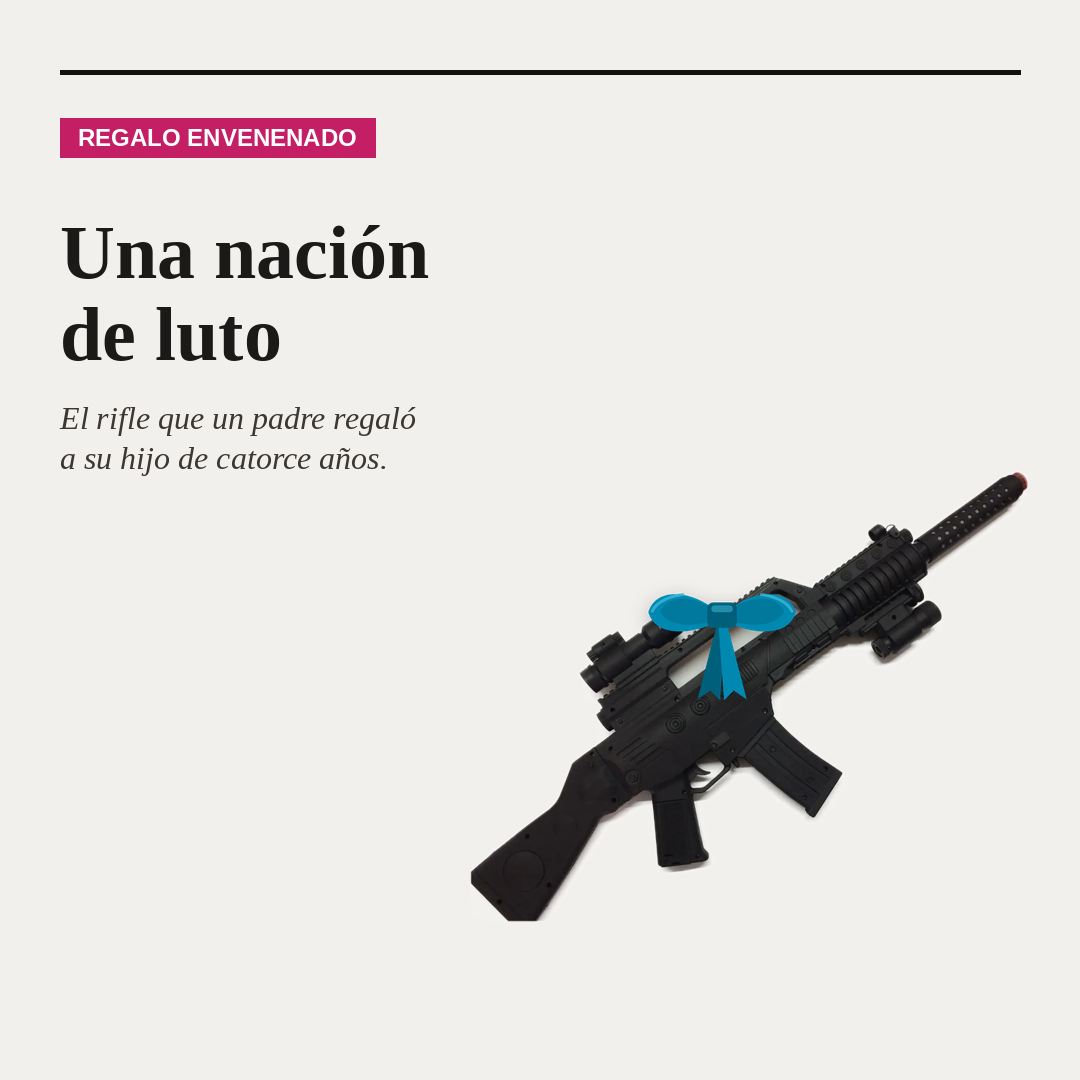
Si el estacionamiento de Idaho plantea quién detiene el arma una vez que dispara, un tribunal de Georgia se ocupó la semana pasada de la pregunta anterior: quién responde por que el arma llegara a la mano equivocada. El 30 de julio, Colin Gray fue sentenciado a quince años de prisión en el primer caso del estado en que un padre es condenado por asesinato en segundo grado por el tiroteo masivo cometido por su hijo. Colin no apretó ningún gatillo. Su hijo Colt, de catorce años, mató a dos estudiantes y a dos maestros en la secundaria Apalachee, en septiembre de 2024, con un rifle de asalto que el propio padre le había regalado.If the Idaho parking lot raises the question of who stops the gun once it fires, a Georgia court dealt last week with the prior question: who answers for the gun reaching the wrong hand in the first place. On July 30, Colin Gray was sentenced to fifteen years in prison in the state’s first case of a father convicted of second-degree murder for a mass shooting committed by his son. Colin did not pull any trigger. His fourteen-year-old son, Colt, killed two students and two teachers at Apalachee High School in September 2024, with an assault rifle his own father had given him as a gift.
Conviene la precisión, que es lo que me separa del panfleto: no es el primer padre estadounidense procesado por el crimen de un hijo. En Michigan, James y Jennifer Crumbley fueron condenados en 2024 por homicidio involuntario tras la matanza de su hijo en la secundaria Oxford, y recibieron diez años cada uno. Lo nuevo en Georgia es el peso del cargo: no negligencia, sino asesinato. La ley cruzó un umbral. Y lo hizo sobre un razonamiento que el juez Nicholas Primm formuló con una claridad que me detuvo: Gray fue condenado, dijo, porque «las luces de advertencia parpadeaban cada vez con más fuerza y usted no le consiguió ayuda ni le retiró el acceso a las armas».Precision matters here, and it’s what separates me from a pamphlet: he is not the first American father prosecuted for a child’s crime. In Michigan, James and Jennifer Crumbley were convicted in 2024 of involuntary manslaughter after their son’s killing at Oxford High School, and each received ten years. What’s new in Georgia is the weight of the charge: not negligence, but murder. The law crossed a threshold. And it did so on reasoning that Judge Nicholas Primm stated with a clarity that stopped me: Gray was convicted, he said, because «the warning lights kept flashing brighter and brighter, and you didn’t get him help or take away his access to guns.»
Esas luces no eran metáfora. El fiscal mostró al tribunal la réplica de una pared del dormitorio del adolescente, convertida en santuario al autor del tiroteo de Parkland de 2018. El riesgo, dijo, «lo miraba a la cara todos los días». Y sin embargo el juez, con una honestidad que agradezco en un magistrado, se negó a fingir que el caso era simple: importa, señaló, que el padre no supiera que su hijo iría ese día a matar, que no planeara el ataque, que no buscara herir a nadie, que no apretara el gatillo. Lo llamó, con razón, «un caso divisivo». No lo resuelvo yo desde esta columna, ni pretendo hacerlo.Those lights were not metaphor. The prosecutor showed the court a replica of a wall in the teenager’s bedroom, turned into a shrine to the 2018 Parkland shooter. The risk, he said, «looked him in the face every day.» And yet the judge, with an honesty I appreciate in a magistrate, refused to pretend the case was simple: it matters, he noted, that the father did not know his son would go kill that day, that he did not plan the attack, that he did not seek to hurt anyone, that he did not pull the trigger. He rightly called it «a divisive case.» I do not resolve it from this column, nor do I intend to.
Lo que sí afirmo es lo que este veredicto ilumina. Durante años, la respuesta cómoda ante cada matanza fue localizar a un monstruo solitario, encerrarlo y pasar página, como si el arma se hubiera materializado en sus manos por generación espontánea. El caso Gray rompe esa comodidad. Reconoce que entre el niño y el rifle hubo un adulto, una decisión y una cadena de señales ignoradas; que el silencio ante las luces que parpadean también es una elección, y que las elecciones tienen autores identificables. Los expertos ya advierten que la condena podría envalentonar a los fiscales a perseguir a más padres. Sea o no ese el camino —y hay razones legítimas para el debate, empezando por la del propio Gray, que ya pidió un nuevo juicio—, el precedente instala una idea que esta nación se resistía a mirar: la responsabilidad por un arma no termina en quien la dispara.What I do assert is what this verdict illuminates. For years, the comfortable response to every massacre was to locate a lone monster, lock him up, and move on, as if the weapon had materialized in his hands by spontaneous generation. The Gray case breaks that comfort. It recognizes that between the child and the rifle there was an adult, a decision, and a chain of ignored warning signs; that silence in the face of flashing lights is also a choice, and that choices have identifiable authors. Experts already warn the conviction could embolden prosecutors to pursue more parents. Whether or not that is the right path — and there are legitimate reasons for debate, starting with Gray’s own request for a new trial — the precedent installs an idea this nation resisted looking at: responsibility for a gun does not end with whoever pulls the trigger.
Lo que no pienso callarWhat I Won’t Stay Silent About
Sería deshonesto cerrar sin conceder lo que corresponde. La honestidad intelectual, que es lo único que me distingue de un panfleto, exige reconocer que Jordan Salinas y el agente fuera de servicio actuaron con valentía y salvaron vidas; que las estadísticas federales sobre intervenciones civiles tienen deficiencias reconocidas y la cifra real probablemente supere a la oficial; y que, entre portadores legales y entrenados, los accidentes documentados son escasos. Quien me lea buscando una caricatura del otro bando no la encontrará. Pero conceder no es capitular. Que la defensa armada funcione a veces no la convierte en solución, ni una excepción heroica en estrategia nacional. El país donde la respuesta esperada a un tiroteo es más fuego cruzado en el estacionamiento de un restaurante familiar sigue siendo, precisamente por eso, un país que no ha resuelto el problema de origen: por qué el atacante pudo llegar armado hasta allí.It would be dishonest to close without conceding what’s due. Intellectual honesty, which is the only thing that distinguishes me from a pamphlet, requires acknowledging that Jordan Salinas and the off-duty officer acted bravely and saved lives; that federal statistics on civilian interventions have acknowledged shortcomings, and the real figure probably exceeds the official one; and that among trained, legal carriers, documented accidents are rare. Anyone reading me looking for a caricature of the other side won’t find one here. But conceding is not capitulating. That armed defense sometimes works does not make it a solution, nor does a heroic exception make it national strategy. The country where the expected response to a shooting is more crossfire in a family restaurant’s parking lot remains, precisely for that reason, a country that has not solved the problem at its origin: how the attacker got there armed in the first place.
CierreClosing
Escribo bajo un seudónimo que lleva el luto en su propósito, y lo sostengo también las semanas en que la noticia trae un héroe o, por fin, una responsabilidad nombrada. Celebro a Salinas; celebro que tres muertos no fueran diez. Y observo, sin celebrar todavía, que un tribunal se atreviera a mirar más allá del gatillo. Son las dos puntas de una misma cadena que este país prefiere no ver entera: en un extremo, el ciudadano que responde al disparo cuando ya suena; en el otro, el adulto que pudo impedir que el arma llegara siquiera a cargarse. Entre ambos está el vacío que ninguna bala ciudadana ni ninguna sentencia posterior llenan del todo: el de una ley que sigue permitiendo que el rifle esté ahí, a la espera. Salinas nos recuerda lo que un valiente puede hacer cuando ya es tarde; Colin Gray, lo que un negligente deja de hacer cuando aún era temprano. Mientras la nación se concentre en los extremos de esa cadena y no en el arma que la recorre entera, seguiré contando, semana tras semana, con la terca esperanza de quedarme sin nada que contar.I write under a pseudonym that carries mourning in its purpose, and I hold to it even in weeks when the news brings a hero, or, finally, a named responsibility. I celebrate Salinas; I celebrate that three dead were not ten. And I note, without celebrating yet, that a court dared to look beyond the trigger. These are the two ends of a single chain this country prefers not to see whole: at one end, the citizen who answers the shot once it’s already firing; at the other, the adult who could have kept the weapon from ever being loaded. Between them lies the gap that no citizen’s bullet and no later sentence fully fills: that of a law that still allows the rifle to be there, waiting. Salinas reminds us what a brave person can do when it’s already late; Colin Gray, what a negligent one fails to do when it was still early. As long as the nation focuses on the two ends of that chain and not on the gun running through all of it, I will keep counting, week after week, with the stubborn hope of running out of things to count.
Nota de fuentes: Datos del suceso y del testimonio de Jordan Salinas: Departamento de Policía de Twin Falls (declaraciones del jefe Matthew Hicks y del sheriff Jack Johnson) y entrevistas recogidas por Idaho Statesman, ABC News y Newsweek (agosto de 2026). Evidencia sobre intervenciones de civiles armados: Crime Prevention Research Center (John R. Lott); Advanced Law Enforcement Rapid Response Training Center, Texas State University (estudio de más de 400 ataques, 2000–2021); análisis del FBI sobre 160 incidentes de tirador activo (2000–2013); RAND Corporation, Bystander and Security Response. Caso Colin Gray (secundaria Apalachee, Winder, Georgia): sentencia del 30 de julio de 2026 dictada por el juez Nicholas Primm en la Corte Superior del Condado de Barrow, según cobertura de ABC News, CNN, Al Jazeera y The Washington Post (solicitud de nuevo juicio, 7 de agosto de 2026); precedente de Michigan (James y Jennifer Crumbley, 2024). Marco comparativo: Everytown Research & Policy y Giffords Law Center. Cifras agregadas: Gun Violence Archive (reporte del 14 de agosto de 2026) y The Trace, Gun Violence Data Hub (segundo trimestre de 2026). Todas las fuentes son de acceso público y fueron consultadas al 15 de agosto de 2026. Las divergencias metodológicas entre registros se exponen deliberadamente en el cuerpo del texto.Source note: Data on the incident and Jordan Salinas’s testimony: Twin Falls Police Department (statements from Chief Matthew Hicks and Sheriff Jack Johnson) and interviews collected by the Idaho Statesman, ABC News, and Newsweek (August 2026). Evidence on armed civilian interventions: Crime Prevention Research Center (John R. Lott); Advanced Law Enforcement Rapid Response Training Center, Texas State University (study of more than 400 attacks, 2000–2021); FBI analysis of 160 active-shooter incidents (2000–2013); RAND Corporation, Bystander and Security Response. Colin Gray case (Apalachee High School, Winder, Georgia): sentence of July 30, 2026, handed down by Judge Nicholas Primm in Barrow County Superior Court, per coverage by ABC News, CNN, Al Jazeera, and The Washington Post (new-trial request, August 7, 2026); Michigan precedent (James and Jennifer Crumbley, 2024). Comparative framework: Everytown Research & Policy and Giffords Law Center. Aggregate figures: Gun Violence Archive (report of August 14, 2026) and The Trace, Gun Violence Data Hub (Q2 2026). All sources are publicly accessible and were consulted as of August 15, 2026. Methodological divergences between records are deliberately laid out in the body of the text.