Autor: lcarmengomez

  • A DOS CUADRAS DE LA ESCUELA | TWO BLOCKS FROM THE SCHOOL

    A DOS CUADRAS DE LA ESCUELA | TWO BLOCKS FROM THE SCHOOL

    L. Carmen Gómez · 17 de septiembre de 2026L. Carmen Gómez · September 17, 2026

    Esta mañana leí el titular desde lejos, y el cuerpo reaccionó antes que la razón: disparos, un muerto, Jorge Mas Canosa Middle School en cierre de emergencia. Conozco esa escuela. He pasado frente a ella más veces de las que puedo contar. Es mi comunidad. Durante unos minutos pensé lo que piensa cualquier persona que ha vivido en el sur de la Florida desde 2018: otra vez.I read the headline from far away this morning, and my body reacted before my reason did: gunfire, one dead, Jorge Mas Canosa Middle School on emergency lockdown. I know that school. I’ve driven past it more times than I can count. It’s my community. For a few minutes I thought what anyone who has lived in South Florida since 2018 thinks: not again.

    No fue otra vez. Los hechos, hasta donde las autoridades los han informado, son otros. Según la Oficina del Sheriff de Miami-Dade, un agente del Departamento de Cumplimiento de la Ley de Florida estaba dentro de su vehículo cuando un hombre se acercó y comenzó a golpear la ventana; el agente salió, hubo una pelea, el hombre lo derribó y el agente disparó. El hombre fue declarado muerto en el lugar poco después. La Oficina de Homicidios asumió la investigación, y no me corresponde adelantar su resultado. El distrito escolar explicó que el cierre se debió a actividad policial ajena a la escuela. Un hombre murió esta mañana, y eso también es luto.It wasn’t again. The facts, as far as authorities have reported them, are different. According to the Miami-Dade Sheriff’s Office, a Florida Department of Law Enforcement agent was inside his vehicle when a man approached and began pounding on the window; the agent got out, there was a struggle, the man knocked him down, and the agent fired. The man was pronounced dead at the scene shortly after. The Homicide Bureau took over the investigation, and it isn’t my place to get ahead of its findings. The school district explained that the lockdown was due to police activity unrelated to the school itself. A man died this morning, and that too is mourning.

    Pero quiero detenerme en esos minutos.But I want to linger on those minutes.

    En esa escuela estudian unos 1,200 niños de sexto a octavo grado. Tienen once, doce, trece años. Cuando se anuncia un cierre de emergencia, ellos no saben si el peligro está a dos cuadras o al otro lado de la puerta. Hacen lo que se les ha enseñado a hacer desde el kínder: callar, esconderse, esperar. Un estudiante contó a 7News que permanecieron encerrados un buen rato, y un padre dijo que los niños estaban ansiosos y nerviosos, igual que los adultos.About 1,200 children in sixth through eighth grade attend that school. They are eleven, twelve, thirteen years old. When an emergency lockdown is announced, they don’t know whether the danger is two blocks away or on the other side of the door. They do what they’ve been taught to do since kindergarten: stay quiet, hide, wait. One student told 7News they were locked in for quite a while, and a parent said the kids were anxious and on edge, just like the adults.

    Yo conozco ese miedo. El 14 de febrero de 2018 vivía cerca de Marjory Stoneman Douglas, en Parkland. Diecisiete personas no volvieron a casa ese día. Aprendí entonces que el miedo no se va cuando se retiran las patrullas. Se queda a vivir en uno. Por eso hoy, a miles de kilómetros, me bastó leer el nombre de una escuela junto a la palabra «disparos» para volver a aquella tarde.I know that fear. On February 14, 2018, I lived near Marjory Stoneman Douglas, in Parkland. Seventeen people did not come home that day. I learned then that the fear doesn’t leave when the patrol cars do. It moves in and stays. That’s why today, thousands of kilometers away, it took only reading a school’s name next to the word «gunfire» to send me back to that afternoon.

    Esa es la herida que casi nunca contamos. Llevamos la cuenta de los muertos, y debemos hacerlo. Pero no llevamos la cuenta de los niños que han pasado una mañana escondidos en un salón, preguntándose si es un simulacro o si es real. No llevamos la cuenta de los padres que manejan hacia la escuela con el teléfono en la mano y el corazón en la boca. Hemos criado a una generación entera que sabe agacharse en silencio antes de saber dividir fracciones, y lo llamamos normalidad.That is the wound we almost never count. We keep track of the dead, and we should. But we don’t keep track of the children who have spent a morning hiding in a classroom, wondering if it’s a drill or if it’s real. We don’t keep track of the parents driving to the school with the phone in one hand and their heart in their throat. We have raised an entire generation that knows how to crouch in silence before it knows how to divide fractions, and we call that normal.

    Después de Parkland, la Florida hizo algo. La Ley de Seguridad Pública Marjory Stoneman Douglas de 2018 subió de 18 a 21 años la edad mínima para comprar armas largas. Fue una respuesta imperfecta, pero fue una respuesta. Desde entonces, el camino ha ido en dirección contraria. En 2023 el estado eliminó el requisito de permiso para portar un arma oculta. En 2025 un tribunal de apelaciones anuló la prohibición de portar armas a la vista. Y en enero de este año la Cámara de Representantes votó, 74 a 37, a favor de bajar otra vez la edad a 18 años; ya lo había aprobado en 2023, 2024 y 2025. Una legisladora que estuvo en Parkland la noche de la masacre dijo que cada intento vuelve a abrir la herida de las familias. Tiene razón.After Parkland, Florida did something. The 2018 Marjory Stoneman Douglas Public Safety Act raised the minimum age to buy long guns from 18 to 21. It was an imperfect response, but it was a response. Since then, the direction has reversed. In 2023 the state eliminated the permit requirement to carry a concealed weapon. In 2025 an appeals court struck down the ban on open carry. And in January of this year the House of Representatives voted, 74 to 37, to lower the age back to 18; it had already passed the same measure in 2023, 2024, and 2025. A lawmaker who was at Parkland the night of the massacre said every attempt reopens the families’ wound. She’s right.

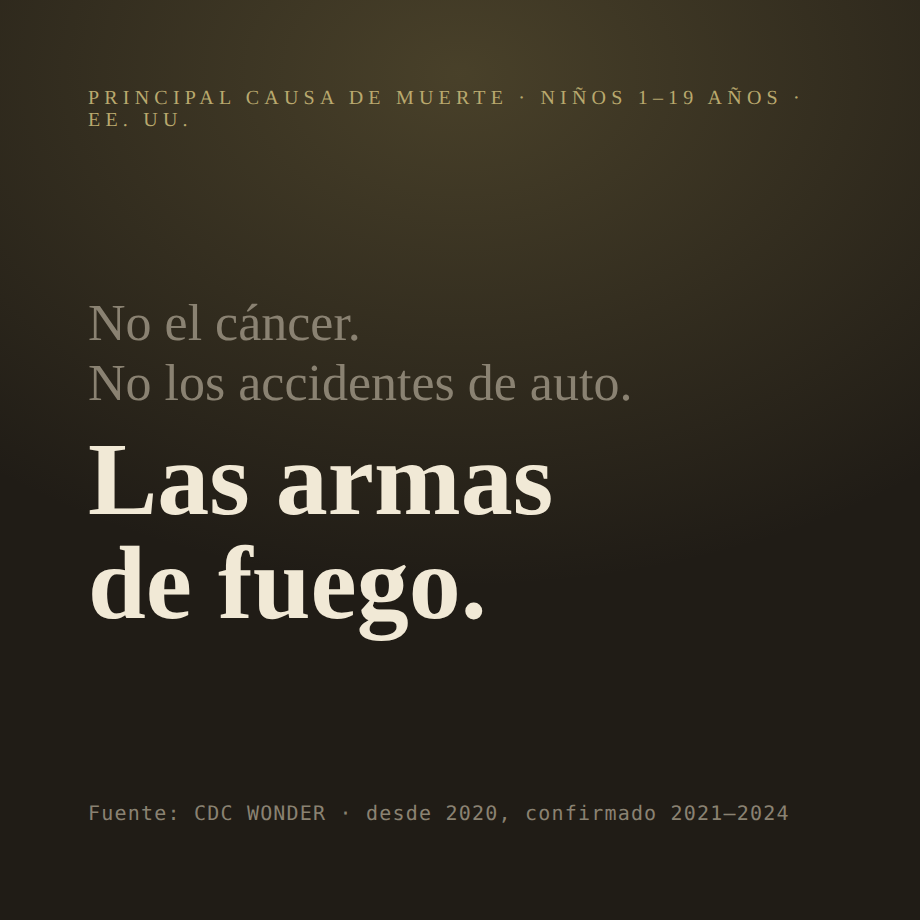
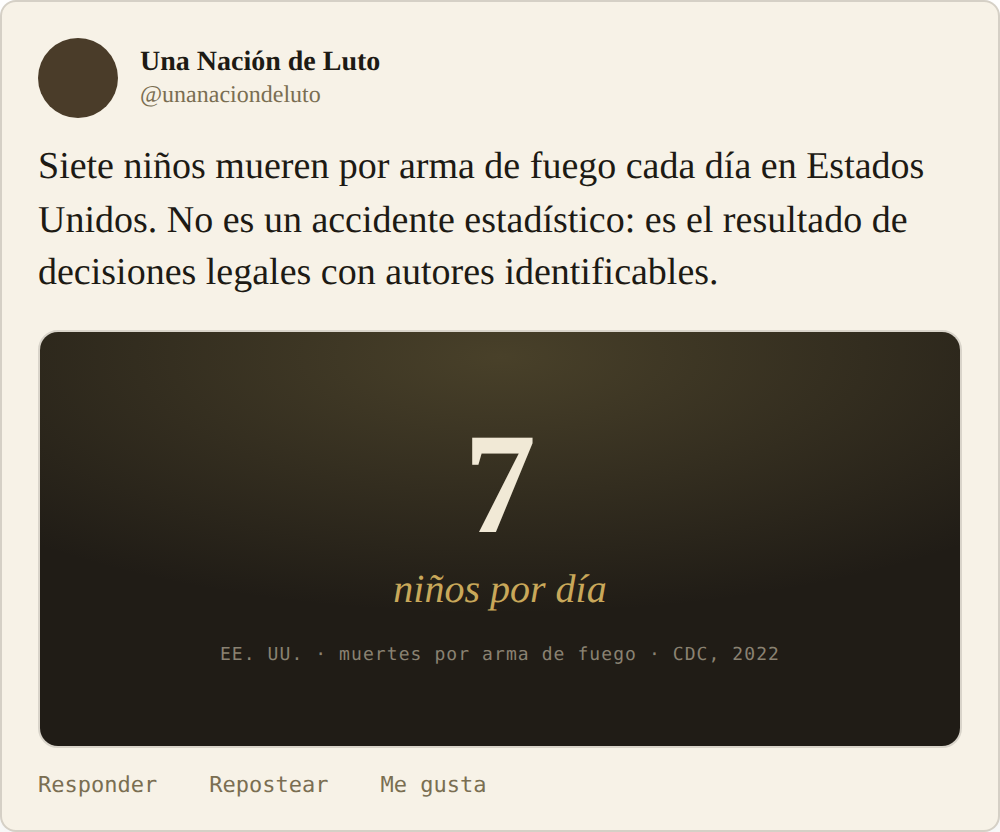
    Mientras tanto, las armas de fuego son desde 2020 la primera causa de muerte de niños y adolescentes en Estados Unidos, por encima de los accidentes de tránsito y del cáncer. Ningún otro país rico acepta esa cifra. Nosotros la aceptamos cada año con la misma fórmula: thoughts and prayers. Pensamientos y oraciones. Tres palabras que se pronuncian en lugar de hacer algo, y que ya no consuelan a nadie porque todos sabemos lo que viene después: nada.Meanwhile, firearms have been, since 2020, the leading cause of death for children and teenagers in the United States, ahead of car accidents and cancer. No other wealthy country accepts that figure. We accept it every year with the same formula: thoughts and prayers. Three words spoken in place of doing anything, words that comfort no one anymore because we all know what comes next: nothing.

    Hoy los niños de Jorge Mas Canosa volvieron a casa. Todos. Escribo esa frase con alivio, y con vergüenza de que en este país sea motivo de alivio. Hoy no fue la escuela. Hoy fue a dos cuadras. Hoy el muerto fue uno y no fue un niño, y por eso mañana nadie hablará de esto.Today the children of Jorge Mas Canosa went home. All of them. I write that sentence with relief, and with shame that in this country it is something to feel relief about. Today it wasn’t the school. Today it was two blocks away. Today there was one death and it wasn’t a child’s, and that is why tomorrow no one will be talking about this.

    ¿Cuándo cuenta la vida de un niño? ¿Cuando ya es un nombre en una lista? ¿O cuenta también esta mañana, cuando todavía está vivo, escondido en un salón, aprendiendo que el miedo forma parte del horario escolar?When does a child’s life count? Only once it’s a name on a list? Or does it also count this morning, while it’s still alive, hiding in a classroom, learning that fear is part of the school schedule?

    Hasta cuándo.How much longer.

    L. Carmen Gómez
    Autora de Una nación de luto / A Nation in Mourning
    L. Carmen Gómez
    Author of A Nation in Mourning

  • LA PUERTA DE AL LADO | THE DOOR NEXT DOOR

    LA PUERTA DE AL LADO | THE DOOR NEXT DOOR

    Por L. Carmen GómezBy L. Carmen Gómez

    Minneapolis es una ciudad del norte de Estados Unidos, en el estado de Minnesota, no muy lejos de la frontera con Canadá. Es una ciudad de lagos y de inviernos largos, conocida también por acoger a una de las comunidades somalíes más grandes del país. En el centro, junto a un parque llamado Loring Park, se levanta una torre de apartamentos: Shoreline Plaza. Cientos de personas viven allí. Es de esos edificios donde uno se cruza con los vecinos en el ascensor, donde los empleados de la recepción saludan por el nombre.Minneapolis is a city in the northern United States, in the state of Minnesota, not far from the Canadian border. It is a city of lakes and long winters, known too for being home to one of the largest Somali communities in the country. Downtown, next to a park called Loring Park, stands an apartment tower: Shoreline Plaza. Hundreds of people live there. It is the kind of building where you run into neighbors in the elevator, where the front-desk staff greet you by name.

    El miércoles 2 de septiembre, poco después de las cuatro y media de la tarde, frente a ese edificio ocurría algo completamente ordinario: un intercambio de custodia. Una madre, un padre, un niño que pasa de unas manos a otras. Es una escena que se repite millones de veces en todo el mundo, cada semana, sin que nadie la recuerde después.On Wednesday, September 2, shortly after four-thirty in the afternoon, something entirely ordinary was happening outside that building: a custody exchange. A mother, a father, a child passing from one set of hands to another. It is a scene repeated millions of times around the world, every week, that no one remembers afterward.

    Esta vez, el padre llevaba una pistola. La llevaba legalmente: tenía un permiso de portación válido. Ese mismo día había sido desalojado de su apartamento, tras un proceso de desahucio motivado por una serie de incidentes de amenazas en el complejo. La policía ya lo conocía. El sistema ya lo conocía. Y aun así, el arma seguía en su cintura.This time, the father was carrying a pistol. He carried it legally: he had a valid carry permit. That same day he had been evicted from his apartment, following an eviction process prompted by a series of threatening incidents at the complex. Police already knew him. The system already knew him. And still, the gun stayed on his waist.

    Disparó primero contra la mujer, la madre de su hijo, quien recibió un balazo en la pierna. El niño logró escapar ileso. Ileso es una palabra que usan los reportes policiales. Ningún niño que ve eso queda ileso.He fired first at the woman, his son’s mother, who was shot in the leg. The child managed to escape unharmed. Unharmed is a word police reports use. No child who witnesses that comes away unharmed.

    Después entró al edificio. Disparó contra dos empleados en la planta baja y subió en el ascensor hasta el noveno piso, donde vivía solo. Allí, en el pasillo de su propio piso, mató a dos de sus vecinos.He then entered the building. He shot two employees on the ground floor and rode the elevator up to the ninth floor, where he lived alone. There, in the hallway of his own floor, he killed two of his neighbors.

    Se llamaban Muse Abdi Afrah y Dale Henry Spry. Muse tenía 61 años; Dale, 63. Los investigadores dijeron que no hay indicios de que el atacante los buscara a ellos específicamente. Simplemente estaban allí. Estaban en su casa, en su pasillo, a unos pasos de sus propias puertas. Habían hecho lo que hacemos todos: volver a casa, cerrar la puerta, confiar en que las paredes nos protegen.Their names were Muse Abdi Afrah and Dale Henry Spry. Muse was 61; Dale, 63. Investigators said there is no indication the attacker specifically targeted them. They simply were there. They were in their own home, in their own hallway, a few steps from their own doors. They had done what all of us do: come home, close the door, trust that the walls protect us.

    La policía llegó en dos minutos y veintiséis segundos. Conviene detenerse en esa cifra, porque desmonta uno de los argumentos favoritos de quienes se niegan a actuar: que la solución es más policía, más rapidez, más armas buenas contra armas malas. Aquí la respuesta fue casi inmediata. Casi ciento sesenta agentes acudieron al lugar. Los oficiales subieron las escaleras hacia los disparos, atravesaron una bruma que apenas les dejaba ver, y dos de ellos recibieron balazos. Fueron valientes, nadie lo discute. Pero cuando llegaron, Muse y Dale ya estaban muriendo. Ninguna respuesta policial, por heroica que sea, llega antes que la bala.Police arrived in two minutes and twenty-six seconds. That figure is worth pausing on, because it dismantles one of the favorite arguments of those who refuse to act: that the solution is more police, faster response, good guns against bad guns. Here the response was nearly immediate. Almost one hundred sixty officers responded to the scene. Officers ran up the stairs toward the gunfire, moved through smoke that barely let them see, and two of them were shot. They were brave; no one disputes that. But by the time they arrived, Muse and Dale were already dying. No police response, however heroic, arrives before the bullet.

    Y hay un detalle más que duele: apenas un año antes, en septiembre, dos hombres habían sido asesinados a tiros dentro del mismo complejo de apartamentos. El mismo edificio. Las mismas puertas.And there is one more detail that hurts: barely a year earlier, also in September, two men had been shot dead inside that same apartment complex. The same building. The same doors.

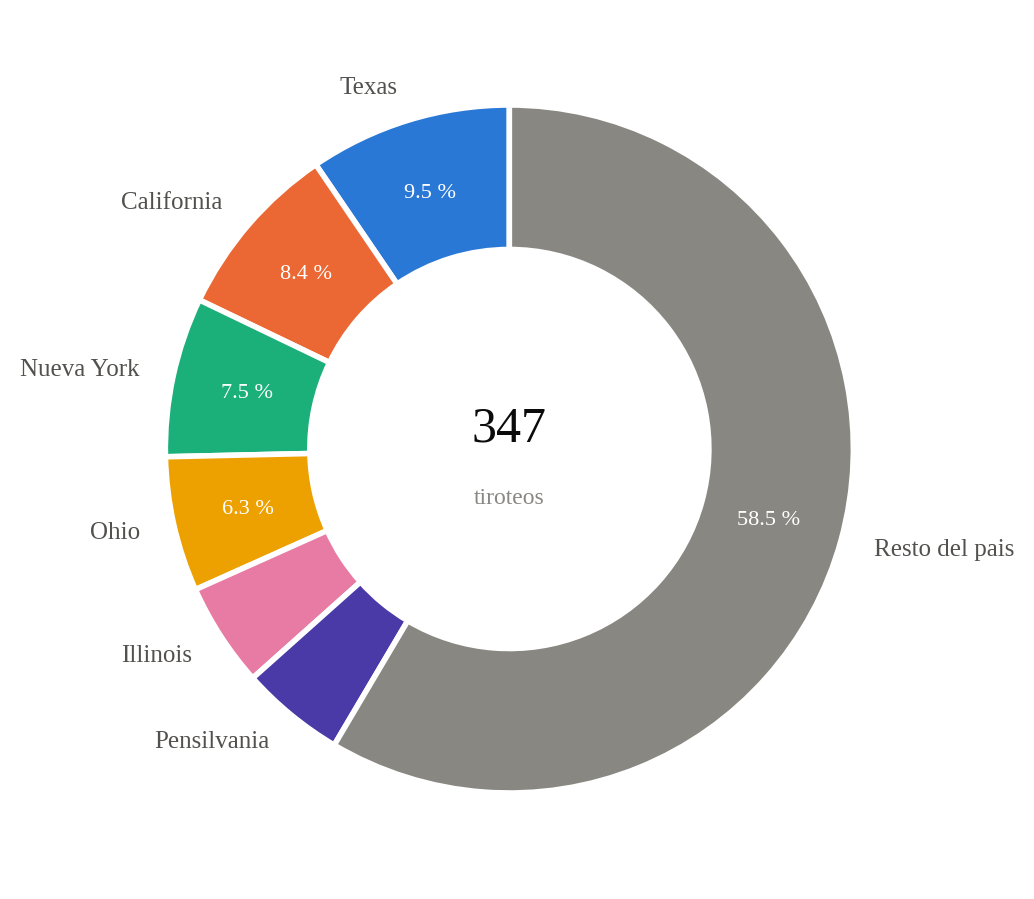
    En esta serie hemos hablado de las escuelas, donde los niños aprenden a esconderse debajo de los pupitres. Hemos hablado de las calles y las celebraciones, donde una nación entera está de luto. Nos quedaba el hogar, el último refugio. Ya no lo es. En Estados Unidos, en lo que va de 2026, se han contabilizado más de trescientos tiroteos masivos. Más de uno por día. La locura continúa, alimentada por la falta de medidas y la irresponsabilidad de unos líderes que prefieren mirar hacia otro lado. Después de cada masacre llegan los mensajes en las redes, las oraciones, los agradecimientos a la policía. Y después, nada.In this series we have talked about schools, where children learn to hide under their desks. We have talked about streets and celebrations, where an entire nation is in mourning. What remained was the home, the last refuge. It no longer is one. In the United States, so far in 2026, more than three hundred mass shootings have been recorded. More than one a day. The madness continues, fed by the absence of action and the irresponsibility of leaders who would rather look away. After every massacre come the social media posts, the prayers, the thanks to police. And then, nothing.

    Muse y Dale no murieron en una guerra, ni en una calle peligrosa, ni en el lugar equivocado. Murieron en el pasillo de su casa, frente a la puerta de al lado. Si eso puede pasar allí, puede pasar en cualquier parte. Esa es la verdad que ningún discurso oficial quiere pronunciar.Muse and Dale did not die in a war, or on a dangerous street, or in the wrong place. They died in the hallway of their own home, in front of the door next door. If that can happen there, it can happen anywhere. That is the truth no official speech wants to say out loud.

    FuentesSources

    • CBS Minnesota — «BCA names 2 residents killed, 2 officers injured in Minneapolis mass shooting that began during custody exchange» (3 de septiembre de 2026). cbsnews.com
    • Star Tribune — «Minneapolis shooting: Three dead, including suspect, multiple people injured» (3 de septiembre de 2026). startribune.com
    • MPR News — «Officials ID suspect, 2 killed in mass shooting at Minneapolis apartment complex» (3 de septiembre de 2026). mprnews.org
    • KSTP 5 Eyewitness News — «Downtown Minneapolis shooting: BCA identifies victims, officers involved» (4 de septiembre de 2026). kstp.com
    • BNO News — «Police name gunman in Minneapolis apartment building shooting; 2 victims identified» (4 de septiembre de 2026). bnonews.com
    • Univision / Gun Violence Archive — cifras de tiroteos masivos en Estados Unidos durante 2026. univision.com
    • CBS Minnesota — «BCA names 2 residents killed, 2 officers injured in Minneapolis mass shooting that began during custody exchange» (September 3, 2026). cbsnews.com
    • Star Tribune — «Minneapolis shooting: Three dead, including suspect, multiple people injured» (September 3, 2026). startribune.com
    • MPR News — «Officials ID suspect, 2 killed in mass shooting at Minneapolis apartment complex» (September 3, 2026). mprnews.org
    • KSTP 5 Eyewitness News — «Downtown Minneapolis shooting: BCA identifies victims, officers involved» (September 4, 2026). kstp.com
    • BNO News — «Police name gunman in Minneapolis apartment building shooting; 2 victims identified» (September 4, 2026). bnonews.com
    • Univision / Gun Violence Archive — U.S. mass shooting figures for 2026. univision.com
  • UNA NACIÓN DE LUTO | A NATION IN MOURNING

    UNA NACIÓN DE LUTO | A NATION IN MOURNING

    Por L. Carmen GómezBy L. Carmen Gómez

    El domingo pasado, en el norte de Estados Unidos, una familia se sentó a cenar y no se levantó de la mesa.Last Sunday, in the northern United States, a family sat down to dinner and never got up from the table.

    La casa está a las afueras de Billings, la ciudad más grande de Montana, un estado tranquilo de montañas y llanuras cerca de la frontera con Canadá. El tipo de lugar donde las puertas se cierran sin llave y los vecinos se conocen por su nombre. Allí, cada semana, los Smith celebraban una cena familiar. Ese domingo estaban todos: la bisabuela Evelyn, de 92 años, que vivía en una residencia cercana y había venido de visita. Los abuelos, Dana y Barbara, dueños de la casa. Su hija Megan, de 39. Y cuatro niños: Owen, de 13. Chloe, de 7. Landon, de 15. Charlotte, de 12.The house sits on the outskirts of Billings, Montana’s largest city, a quiet state of mountains and plains near the Canadian border. The kind of place where doors are left unlocked and neighbors know each other by name. There, every week, the Smiths held a family dinner. That Sunday, everyone was there: great-grandmother Evelyn, 92, who lived in a nearby care home and had come to visit. The grandparents, Dana and Barbara, who owned the house. Their daughter Megan, 39. And four children: Owen, 13. Chloe, 7. Landon, 15. Charlotte, 12.

    Los niños ni siquiera debían estar allí ese día. La cena familiar solía ser los viernes. El azar más cruel es el que se disfraza de rutina.The children weren’t even supposed to be there that day. Family dinner was usually held on Fridays. The cruelest chance is the kind that disguises itself as routine.

    Poco después de las seis de la tarde, alguien más llegó a la casa. También era de la familia: hijo, hermano, tío, nieto. Había vivido allí durante años, hasta que unas semanas antes sus padres le pidieron que se marchara. Ese domingo volvió sin avisar, y abrió fuego.Shortly after six in the evening, someone else arrived at the house. He too was family: son, brother, uncle, grandson. He had lived there for years, until a few weeks earlier his parents had asked him to leave. That Sunday he came back unannounced, and opened fire.

    Desde dentro de la casa, Charlotte marcó el 911. Doce años. Mientras todo se derrumbaba a su alrededor, esa niña hizo lo único que se le enseña a hacer a un niño en una emergencia: pedir ayuda. Sus vecinos la recuerdan hoy como la heroína de la familia.From inside the house, Charlotte dialed 911. Twelve years old. As everything collapsed around her, that girl did the one thing a child is taught to do in an emergency: ask for help. Her neighbors remember her today as the family’s hero.

    Al otro lado de la ciudad, Adam, el padre de Landon y Charlotte, trabajaba en el aeropuerto. Escuchó por la radio de emergencias que había un tiroteo activo. Llamó a cada miembro de su familia. Nadie contestó. Cruzó la ciudad corriendo y, cuando llegó, la casa ardía. Dos horas después le confirmaron que su esposa y sus hijos estaban muertos.Across town, Adam, the father of Landon and Charlotte, was at work at the airport. He heard over the emergency radio that there was an active shooting. He called every member of his family. No one answered. He raced across the city, and when he arrived, the house was on fire. Two hours later he was told his wife and children were dead.

    Después contaría algo que no me suelta desde que lo leí: cada vez que él le decía a Charlotte «te quiero», ella respondía «yo te quiero más». El luto de una nación no se mide en cifras. Se mide en las frases que se quedan sin respuesta.He would later share something that hasn’t let go of me since I read it: every time he told Charlotte «I love you,» she would answer «I love you more.» A nation’s mourning is not measured in figures. It is measured in the sentences left unanswered.

    Días más tarde, cuando los investigadores por fin pudieron entrar entre los escombros, encontraron dos cosas casi intactas: un álbum de fotos y una Biblia familiar. La memoria y la fe, sobreviviendo entre las cenizas, esperando a alguien que ya no va a volver a buscarlas.Days later, when investigators were finally able to enter the wreckage, they found two things nearly intact: a photo album and a family Bible. Memory and faith, surviving among the ashes, waiting for someone who will never come looking for them again.

    Hace unas semanas escribí sobre las habitaciones vacías que dejan los tiroteos escolares en Estados Unidos. Pensaba entonces en los cuartos de los niños que no vuelven de la escuela. Hoy pienso en las mesas. Y en que esta historia, con toda su crueldad particular, no es una excepción. En lo que va de 2026, Estados Unidos acumula 286 tiroteos masivos y más de 650 niños y adolescentes muertos por armas de fuego, según Gun Violence Archive. Solo julio registró 68 tiroteos masivos, el mes más violento del año; agosto ya suma más de treinta. Léelo despacio: más de dos por día. Un país donde la excepción se ha vuelto calendario.A few weeks ago I wrote about the empty rooms left behind by school shootings in the United States. I was thinking then of the bedrooms of children who don’t come home from school. Today I’m thinking about the tables. And about the fact that this story, with all its particular cruelty, is not an exception. So far in 2026, the United States has accumulated 286 mass shootings and more than 650 children and teenagers killed by firearms, according to the Gun Violence Archive. July alone recorded 68 mass shootings, the most violent month of the year; August already counts more than thirty. Read that slowly: more than two a day. A country where the exception has become the calendar.

    Cuando la tragedia ocurre en una escuela, al menos existe el reflejo del debate público. Pero cuando ocurre en una cena de domingo, en una casa cualquiera, apenas dura un ciclo de noticias. Como si el horror doméstico fuera menos horror. Como si el arma que entra por la puerta de casa doliera menos que la que entra por la puerta del aula.When the tragedy happens at a school, there is at least the reflex of public debate. But when it happens at a Sunday dinner, in an ordinary house, it barely lasts one news cycle. As if domestic horror were somehow less horror. As if the gun that comes through the front door hurt less than the one that comes through the classroom door.

    En Billings, una ciudad de 120.000 habitantes, el alcalde dijo que sería difícil encontrar a alguien que no tuviera alguna conexión con las víctimas. Una nación de luto no es una metáfora. Es una mesa puesta. Es una llamada al 911 hecha por una niña de doce años. Es un «te quiero más» que ya nadie va a contestar.In Billings, a city of 120,000, the mayor said it would be hard to find anyone without some connection to the victims. A nation in mourning is not a metaphor. It is a table set for dinner. It is a 911 call made by a twelve-year-old girl. It is an «I love you more» that no one will ever answer again.

    FuentesSources

    • Associated Press / ABC News — «A Montana man killed 8 relatives, including 4 kids, at Sunday dinner, family says» (agosto de 2026).
    • NBC News — «12-year-old who called 911 mourned after her uncle kills eight in Montana mass shooting» (agosto de 2026).
    • CNN — «Investigators search for evidence at burned Montana home where 8 relatives were killed» (agosto de 2026).
    • Gun Violence Archive — Datos de tiroteos masivos en Estados Unidos, 2026.
    • Univision Noticias — Reportes sobre cifras de tiroteos masivos y víctimas menores de edad en 2026.
    • Associated Press / ABC News — «A Montana man killed 8 relatives, including 4 kids, at Sunday dinner, family says» (August 2026).
    • NBC News — «12-year-old who called 911 mourned after her uncle kills eight in Montana mass shooting» (August 2026).
    • CNN — «Investigators search for evidence at burned Montana home where 8 relatives were killed» (August 2026).
    • Gun Violence Archive — U.S. mass shooting data, 2026.
    • Univision Noticias — Reporting on mass shooting figures and underage victims in 2026.
  • TODAS LAS HABITACIONES VACÍAS: UNA NACIÓN DE LUTO QUE NO APRENDE A DESPERTAR | ALL THE EMPTY ROOMS: A NATION IN MOURNING THAT WON’T WAKE UP

    TODAS LAS HABITACIONES VACÍAS: UNA NACIÓN DE LUTO QUE NO APRENDE A DESPERTAR | ALL THE EMPTY ROOMS: A NATION IN MOURNING THAT WON’T WAKE UP

    Por L. Carmen GómezBy L. Carmen Gómez

    Hoy vi el documental Todas las habitaciones vacías y recordé el miedo que sentía cuando mis hijos estaban en la escuela.Today I watched the documentary All the Empty Rooms, and it brought back the fear I used to feel when my children were in school.

    Fue en aquellos años en que los tiroteos masivos empezaron a volverse parte del paisaje, una noticia más entre las noticias. Mis hijos mayores ya se habían graduado para entonces, pero el menor seguía en la universidad, y yo vivía con un pánico sordo que no sabía cómo nombrar. No era el susto que llega y pasa: era una alarma encendida de fondo, día tras día. Un teléfono sonando a una hora extraña generaba ansiedad. Una alerta de última hora, y yo conteniendo la respiración hasta saber en qué ciudad, en qué campus.It was in those years when mass shootings began to become part of the landscape, just one more piece of news among the news. My older children had already graduated by then, but my youngest was still in college, and I lived with a dull panic I didn’t know how to name. It wasn’t the kind of fright that arrives and passes: it was an alarm left running in the background, day after day. A phone ringing at an odd hour produced anxiety. A breaking-news alert, and me holding my breath until I knew which city, which campus.

    Lo más cruel de ese miedo era su impotencia. Yo había hecho todo lo que una madre puede hacer: criarlos, cuidarlos, verlos crecer. Y sin embargo, su seguridad ya no dependía de mí, sino de un aula, de un pasillo, de un lugar donde yo no podía entrar a protegerlos. Aprendí entonces algo que nadie te advierte: el miedo no se gradúa con los hijos. Y mientras el país entero se acostumbraba, yo me negaba a acostumbrarme, porque acostumbrarse a eso ya era una forma de rendición.The cruelest part of that fear was its powerlessness. I had done everything a mother can do: raise them, care for them, watch them grow. And yet their safety no longer depended on me, but on a classroom, a hallway, a place I could not enter to protect them. I learned then something no one warns you about: fear does not graduate along with your children. And while the whole country grew accustomed to it, I refused to grow accustomed, because getting used to it was already a form of surrender.

    Por eso estas páginas no son solo una reseña. Son mi manera de mirar de frente aquello que durante años solo pude imaginar en la peor de mis noches.That is why these pages are not just a review. They are my way of looking straight at what, for years, I could only imagine on my worst nights.

    La habitación que quedaThe Room That’s Left

    Cada mañana, en miles de hogares a lo largo de Estados Unidos, un padre o una madre despide a su hijo en la puerta de la escuela. Es un gesto tan cotidiano que se vuelve invisible: la mochila al hombro, el beso apresurado, la promesa de verse por la tarde. Para la mayoría de las familias, esa tarde llega. Para un número que se niega a disminuir lo suficiente, no llega nunca. Y entonces queda la habitación.Every morning, in thousands of homes across the United States, a parent says goodbye to a child at the school door. It is a gesture so routine it becomes invisible: the backpack over a shoulder, the hurried kiss, the promise to see each other that afternoon. For most families, that afternoon comes. For a number that refuses to shrink enough, it never does. And then the room remains.

    El documental de Netflix All the Empty Rooms (Todas las habitaciones vacías), estrenado el primero de diciembre de 2025 y disponible con audio en español latinoamericano, se atreve a mirar precisamente ese espacio que el resto del país prefiere no mirar. Dirigido por Joshua Seftel, sigue al corresponsal de CBS News Steve Hartman y al fotógrafo Lou Bopp mientras entrevistan y documentan las habitaciones dejadas atrás por víctimas de tiroteos escolares. No es un recuento de balas ni de sospechosos. Es un retrato de la ausencia.The Netflix documentary All the Empty Rooms, released December 1, 2025, dares to look precisely at the space the rest of the country prefers not to look at. Directed by Joshua Seftel, it follows CBS News correspondent Steve Hartman and photographer Lou Bopp as they interview families and document the rooms left behind by school-shooting victims. It is not a tally of bullets or suspects. It is a portrait of absence.

    La geografía del dueloThe Geography of Mourning

    Lo que hace insoportable, y necesario, a este documental es su intimidad. A lo largo de ocho años, Bopp y Hartman visitaron las habitaciones de ocho víctimas de tiroteos escolares, no solo en Parkland, sino también en Saugus, California; Uvalde, Texas; y Newtown, Connecticut. Estos nombres ya no son solo lugares en un mapa. Son cicatrices en la memoria colectiva de una nación.What makes this documentary unbearable, and necessary, is its intimacy. Over eight years, Bopp and Hartman visited the rooms of eight school-shooting victims, not only in Parkland, but also in Saugus, California; Uvalde, Texas; and Newtown, Connecticut. These names are no longer just places on a map. They are scars in a nation’s collective memory.

    Los detalles se quedan grabados. Los espectadores verán la habitación temática de Bob Esponja de Dominic Blackwell, de catorce años, uno de los dos adolescentes asesinados en el tiroteo de 2019 en Saugus High School. Su madre, Nancy, explica algo que revela la profundidad de un dolor que la mayoría nunca conocerá: hay una cesta de ropa que no se ha lavado desde que él murió hace más de cinco años, excepto los calcetines y la ropa interior, porque no querían perder su olor.The details stay with you. Viewers see the SpongeBob-themed bedroom of fourteen-year-old Dominic Blackwell, one of two teenagers killed in the 2019 shooting at Saugus High School. His mother, Nancy, reveals something that shows the depth of a grief most people will never know: there is a laundry basket that has not been washed since he died more than five years ago, except for the socks and underwear, because they didn’t want to lose his scent.

    En otra habitación, en California, a los trece años, Gracie Muehlberger escribió cartas llenas de esperanza dirigidas a su yo futura; sus padres las encontraron semanas después de que ella muriera en un tiroteo escolar. Ese yo futuro nunca existió. La carta quedó, como la habitación, suspendida en un tiempo que dejó de avanzar.In another room, in California, thirteen-year-old Gracie Muehlberger had written letters full of hope addressed to her future self; her parents found them weeks after she died in a school shooting. That future self never existed. The letter remained, like the room, suspended in a time that stopped moving forward.

    El precio de la costumbreThe Price of Habit

    El propio Hartman confiesa el motivo que lo impulsó, y es una acusación que nos incluye a todos. Dijo que se estaba volviendo insensible, olvidando las tragedias, olvidando a los niños, e intentó pensar qué podría sacarnos de ese entumecimiento; fue entonces cuando pensó en las habitaciones. Su frustración se dirige a un país que ha aprendido a seguir adelante con una velocidad escalofriante. Como si el país hubiera aceptado que esto es quienes somos: un país de tiroteos escolares.Hartman himself admits the motive that drove him, and it is an accusation that includes all of us. He said he was becoming numb, forgetting the tragedies, forgetting the children, and tried to think what could pull us out of that numbness; that’s when he thought of the rooms. His frustration is aimed at a country that has learned to move on at a chilling speed. As if the country had accepted that this is who we are: a country of school shootings.

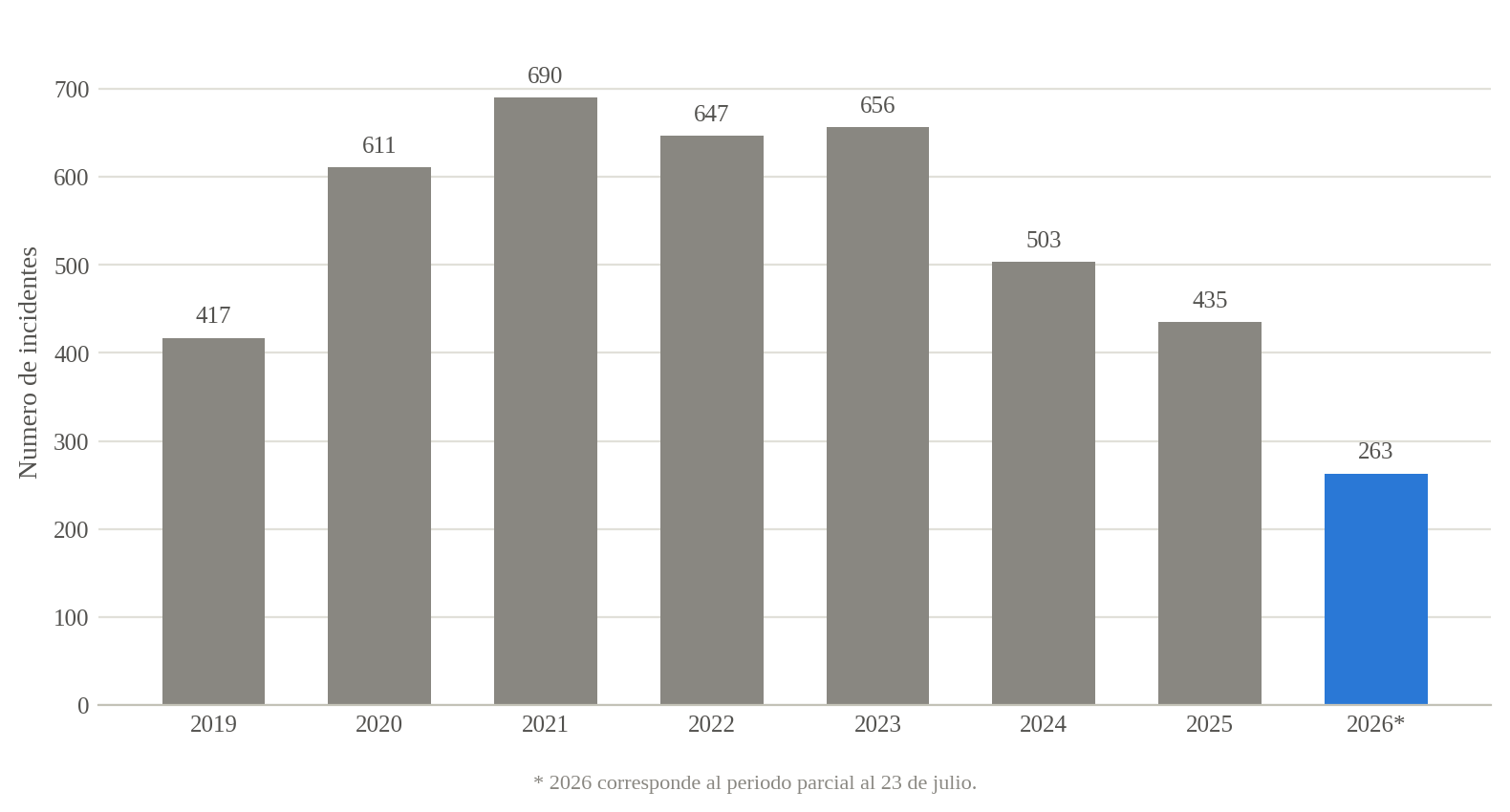
    Ese entumecimiento del que habla Hartman es exactamente lo que yo temía cuando mi hijo menor estaba en el campus: no solo la tragedia, sino la indiferencia que la rodeaba. Las cifras confirman por qué esa costumbre es tan peligrosa. Desde el tiroteo de Columbine High School en 1999, más de doscientos estudiantes, educadores y otras personas han sido asesinados en campus escolares a lo largo de Estados Unidos, según el Brady Group. Y aunque hay señales de descenso, con 233 incidentes en 2025, el número más bajo desde 2020, cuando ocurrieron 116, el problema persiste. El número anual de tiroteos escolares, registrado desde 1966, llegó a su máximo en 2023 con 352 incidentes, de acuerdo con la K-12 School Shooting Database.The numbness Hartman describes is exactly what I feared when my youngest was on campus: not just the tragedy, but the indifference surrounding it. The figures confirm why that habituation is so dangerous. Since the 1999 Columbine High School shooting, more than two hundred students, educators, and others have been killed on school campuses across the United States, according to the Brady Group. And although there are signs of decline, with 233 incidents in 2025, the lowest number since 2020’s 116, the problem persists. The annual number of school shootings, tracked since 1966, peaked in 2023 with 352 incidents, according to the K-12 School Shooting Database.

    El año en curso no ofrece consuelo. Según un análisis de Education Week, ha habido diecisiete tiroteos escolares este año que resultaron en heridos o muertes, y 258 desde el primero de enero de 2018. Cada uno de esos números es una habitación que se apagará. Cada uno es una cama que nadie volverá a deshacer.This year offers no comfort. According to an Education Week analysis, there have been seventeen school shootings this year resulting in injuries or deaths, and 258 since January 1, 2018. Each of those numbers is a room about to go dark. Each is a bed no one will ever unmake again.

    Lo que revela el silencioWhat the Silence Reveals

    «En muchos sentidos, esta película trata sobre el silencio», dice el cineasta Joshua Seftel. Ese silencio es el de una casa donde falta una voz. Es el silencio del pasillo por el que ya no corre nadie. Es, también, el silencio cómodo de una sociedad que ha decidido que la tragedia es el precio aceptable de la inacción.«In a lot of ways, this film is about silence,» says filmmaker Joshua Seftel. That silence is the silence of a house missing a voice. It is the silence of the hallway no one runs down anymore. It is, too, the comfortable silence of a society that has decided tragedy is the acceptable price of inaction.

    Hartman abriga una esperanza concreta para su trabajo. Al final de la película afirma que, si todos pudiéramos entrar en estas habitaciones, seríamos un país distinto; espera llevar el filme al Congreso. La apuesta es sencilla y devastadora: que ver la ropa sin lavar, las cartas sin respuesta y las camas sin deshacer logre lo que las estadísticas, repetidas hasta el agotamiento, no han conseguido.Hartman holds a concrete hope for his work. At the film’s end he states that if we could all step into these rooms, we would be a different country; he hopes to bring the film to Congress. The wager is simple and devastating: that seeing the unwashed clothes, the unanswered letters, and the unmade beds might accomplish what statistics, repeated to exhaustion, have not.

    Una despedida que no debería ser definitivaA Goodbye That Shouldn’t Be Final

    Un padre deja a su hijo en la escuela y confía, como un acto de fe cotidiano, en que la puerta que se cierra por la mañana volverá a abrirse por la tarde. La nación entera se sostiene sobre esa confianza. Yo la sostuve durante años con el corazón en la mano. Cuando esa confianza se rompe, no queda un titular pasajero. Queda una habitación cerrada, con el olor todavía presente, con los juguetes en su sitio, con el futuro escrito en cartas que nadie leerá.A parent leaves a child at school and trusts, as a daily act of faith, that the door closing in the morning will open again that afternoon. The whole nation rests on that trust. I carried it for years with my heart in my hand. When that trust breaks, what’s left is not a passing headline. What’s left is a closed room, the scent still there, the toys still in place, the future written in letters no one will read.

    All the Empty Rooms nos pide algo incómodo: dejar de leer estos hechos como cifras y empezar a habitarlos como pérdidas. Una nación de luto tiene dos caminos. Puede seguir vaciando habitaciones, una tras otra, hasta que el entumecimiento sea total. O puede, por fin, decidir que ninguna cama más merece quedar hecha para siempre.All the Empty Rooms asks something uncomfortable of us: to stop reading these facts as figures and start inhabiting them as losses. A nation in mourning has two paths. It can keep emptying rooms, one after another, until the numbness is total. Or it can, finally, decide that no more beds deserve to stay made forever.

    Fuentes consultadas: Netflix, All the Empty Rooms (2025); Rolling Stone; CNN; Time; CBS News; The Trace; Netflix Tudum; K-12 Dive / K-12 School Shooting Database; Education Week.Sources consulted: Netflix, All the Empty Rooms (2025); Rolling Stone; CNN; Time; CBS News; The Trace; Netflix Tudum; K-12 Dive / K-12 School Shooting Database; Education Week.

  • EL BUEN CIUDADANO ARMADO | THE GOOD GUY WITH A GUN

    EL BUEN CIUDADANO ARMADO | THE GOOD GUY WITH A GUN

    Del héroe del estacionamiento al padre en el banquillo: la pregunta de quién responde por el armaFrom the parking-lot hero to the father in the dock: the question of who answers for the gun

    L. Carmen Gómez · 15 de agosto de 2026L. Carmen Gómez · August 15, 2026

    La semana pasada escribí sobre Twin Falls desde la distancia del comparativista: la anomalía de un país rico cuya tasa de homicidios por arma de fuego multiplica por veintiséis la del resto de las democracias de su nivel. Cerré aquella columna con una salvedad que, al releerla, me pareció demasiado breve para el peso que carga. Prometí, sin decirlo, volver sobre ella. Lo hago ahora, porque no soy de las que esconden la parte incómoda de su propio argumento.Last week I wrote about Twin Falls from the distance of the comparativist: the anomaly of a wealthy country whose firearm homicide rate is twenty-six times that of the other democracies at its level. I closed that column with a caveat that, rereading it, struck me as too brief for the weight it carries. I promised, without saying so, to return to it. I do so now, because I am not one to hide the uncomfortable part of my own argument.

    Aquel 1 de agosto, en el estacionamiento de un restaurante recién inaugurado en Idaho, un hombre con un rifle disparó contra automóviles y contra la gente que huía. Tres personas murieron y siete resultaron heridas. El agresor no fue detenido por la ley, que aún no llegaba, sino por dos hombres que decidieron avanzar hacia el fuego en lugar de alejarse de él: un agente estatal fuera de servicio y un civil armado. La policía acreditó que esa respuesta desvió al atacante y evitó que la cifra fuera mayor. Ese es el hecho. Y ese hecho merece ser mirado de frente.On that August 1, in the parking lot of a newly opened restaurant in Idaho, a man with a rifle fired on cars and on people fleeing. Three people died and seven were wounded. The attacker was not stopped by the law, which had not yet arrived, but by two men who chose to move toward the gunfire instead of away from it: an off-duty state trooper and an armed civilian. Police credited that response with diverting the attacker and preventing a higher toll. That is the fact. And that fact deserves to be looked at directly.

    El nombre detrás del titularThe Name Behind the Headline

    El ciudadano se llama Jordan Salinas, tiene treinta y cinco años y es cuidador a tiempo completo de su hermano, en silla de ruedas. No es un vaquero de discurso ni un activista del gatillo. Contó a la prensa local que comenzó a entrenarse con armas después de un tiroteo ocurrido en 2021, que practicaba semanalmente y que nunca antes había apuntado a un ser vivo. Cuando escuchó los disparos, avanzó —según su propio relato— casi de forma automática, buscó el origen del fuego y, al identificar al agresor, disparó. Describió el instante con una frase que resume mejor que cualquier estadística lo que ocurrió: el atacante, dijo, dejó de sentirse cómodo cuando las balas empezaron a venir en ambas direcciones.The citizen’s name is Jordan Salinas. He is thirty-five and the full-time caregiver for his brother, who uses a wheelchair. He is no talk-show cowboy or trigger activist. He told local press that he began training with firearms after a 2021 shooting, that he practiced weekly, and that he had never before aimed at a living being. When he heard the shots, he moved forward — by his own account — almost automatically, sought the source of the gunfire, and, on identifying the attacker, fired. He described the moment with a line that sums up what happened better than any statistic: the attacker, he said, stopped feeling comfortable once bullets started coming from both directions.

    Reconozco el instinto de convertir a Salinas en símbolo. La Asociación Nacional del Rifle lo hizo casi de inmediato. Y comprendo por qué: es un relato limpio, con un héroe verificable y un desenlace que consuela. Quienes defienden el porte de armas verán en él la prueba viva de su tesis —que a un mal actor armado solo lo detiene un buen ciudadano armado—. No pienso arrebatarles el hecho. Pienso, en cambio, ponerlo dentro de su contexto, que es donde las cosas dejan de ser eslóganes y empiezan a ser preguntas.I recognize the instinct to turn Salinas into a symbol. The National Rifle Association did so almost immediately. And I understand why: it is a clean story, with a verifiable hero and a consoling outcome. Those who defend gun carry will see in him the living proof of their thesis — that a bad guy with a gun is only stopped by a good guy with a gun. I don’t intend to take the fact away from them. I intend, instead, to place it within its context, which is where things stop being slogans and start being questions.

    La excepción no es un mecanismoThe Exception Is Not a Mechanism

    Sobre la eficacia del ciudadano armado conviven dos cuerpos de datos que rara vez se sientan a la misma mesa. El Centro de Investigación para la Prevención del Delito, dirigido por el economista John Lott, sostiene que las estadísticas federales subestiman de forma grave las intervenciones civiles, y que la proporción real de ataques detenidos por portadores legales es muy superior a la oficial, sobre todo donde el porte está permitido. Frente a él, un cuerpo de investigación más amplio apunta en dirección contraria: el Centro de Formación en Respuesta Rápida de la Universidad Estatal de Texas, tras estudiar más de cuatrocientos ataques entre 2000 y 2021, halló que un civil armado detuvo al agresor disparándole en apenas un cinco por ciento de los casos; un análisis del FBI concluyó que rara vez un individuo armado ajeno a la policía puso fin al ataque; y la corporación RAND documentó que en cuatro de cada cinco intervenciones logradas no hubo arma de por medio. No traigo estas cifras para anular el caso de Idaho, sino para situarlo: un Jordan Salinas existe, tiene nombre y salvó vidas, pero es la excepción memorable, no el mecanismo fiable sobre el que una sociedad puede descansar su seguridad.Two bodies of data coexist on the effectiveness of the armed citizen, and they rarely sit at the same table. The Crime Prevention Research Center, led by economist John Lott, argues that federal statistics badly undercount civilian interventions, and that the real proportion of attacks stopped by legal carriers is far higher than official figures show, especially where carry is permitted. Against this, a broader body of research points the other way: the Advanced Law Enforcement Rapid Response Training Center at Texas State University, after studying more than four hundred attacks between 2000 and 2021, found that an armed civilian stopped the attacker by shooting him in just five percent of cases; an FBI analysis concluded that an armed individual outside law enforcement rarely ended the attack; and the RAND Corporation documented that in four out of five successful interventions, no weapon was involved. I don’t bring up these figures to cancel out the Idaho case, but to place it: a Jordan Salinas exists, has a name, and saved lives — but he is the memorable exception, not the reliable mechanism on which a society can rest its safety.

    Y es que algo posible no se convierte, por serlo, en política pública. Un tiroteo ocurre en un lugar concurrido, en segundos, en medio del pánico. La fantasía de que en cada escenario habrá un ciudadano entrenado, sereno y capaz de distinguir al agresor sin herir a un inocente choca contra lo que sabemos de la conducta humana bajo fuego. Salinas mismo confesó que era la primera vez que apuntaba a una persona; otros, en su lugar, han retenido el disparo por miedo a alcanzar a un transeúnte. Construir la seguridad de una nación sobre la esperanza de que el buen ciudadano armado siempre estará ahí, y siempre acertará, es delegar en la suerte lo que corresponde a la ley. Los países que redujeron sus matanzas no lo lograron multiplicando defensores espontáneos, sino reduciendo el acceso del agresor al arma. Esa es la variable que sí se puede legislar.Something being possible does not, by being so, make it public policy. A shooting happens in a crowded place, in seconds, amid panic. The fantasy that a trained, calm citizen capable of distinguishing the attacker without wounding a bystander will be present in every scenario collides with what we know about human behavior under fire. Salinas himself admitted it was the first time he had aimed at a person; others, in his place, have held their fire out of fear of hitting a bystander. Building a nation’s safety on the hope that the good guy with a gun will always be there, and will always get it right, is delegating to luck what belongs to the law. Countries that reduced their massacres did not do so by multiplying spontaneous defenders, but by reducing the attacker’s access to the weapon. That is the variable that actually can be legislated.

    El otro extremo de la cadena: un padre en el banquilloThe Other End of the Chain: A Father in the Dock

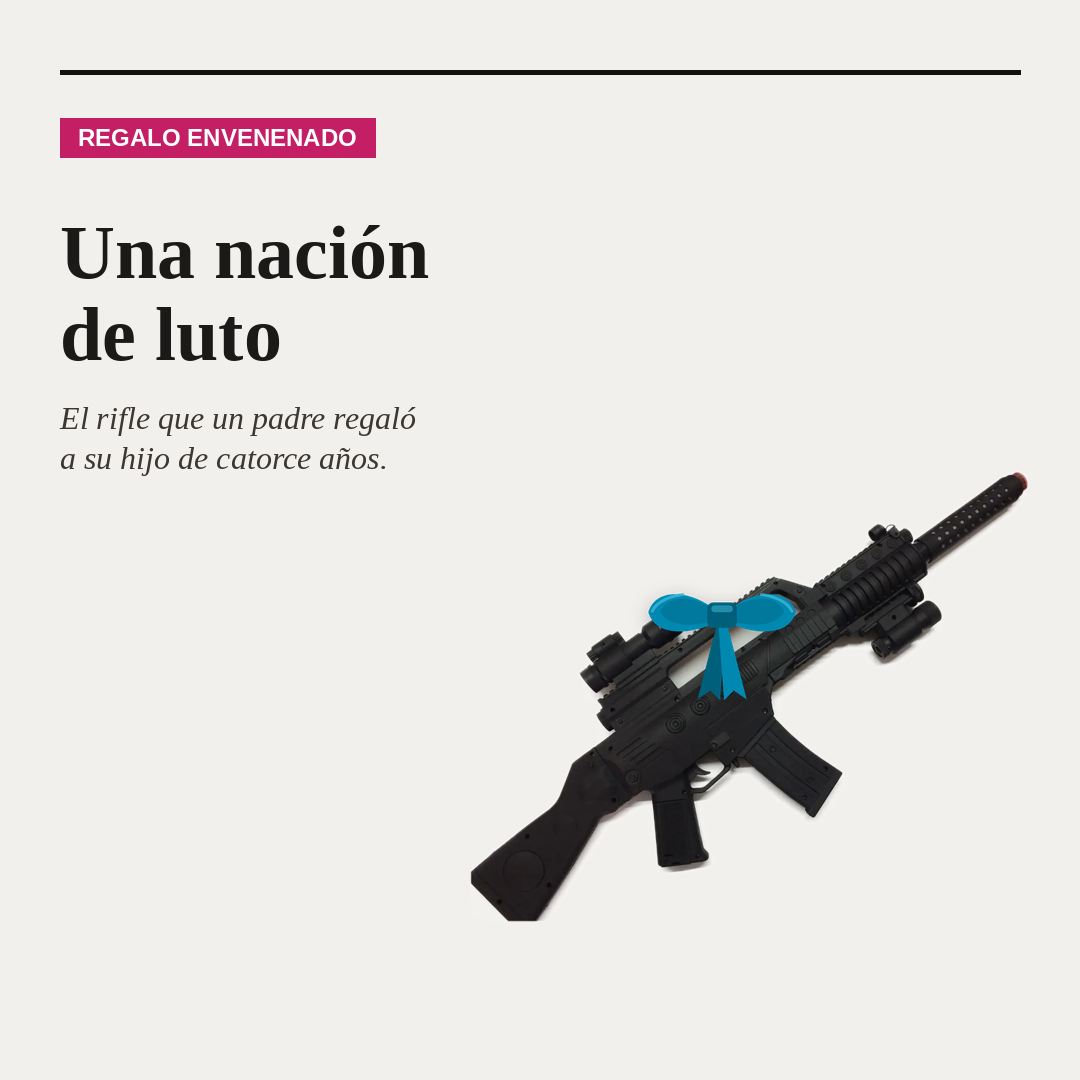
    Si el estacionamiento de Idaho plantea quién detiene el arma una vez que dispara, un tribunal de Georgia se ocupó la semana pasada de la pregunta anterior: quién responde por que el arma llegara a la mano equivocada. El 30 de julio, Colin Gray fue sentenciado a quince años de prisión en el primer caso del estado en que un padre es condenado por asesinato en segundo grado por el tiroteo masivo cometido por su hijo. Colin no apretó ningún gatillo. Su hijo Colt, de catorce años, mató a dos estudiantes y a dos maestros en la secundaria Apalachee, en septiembre de 2024, con un rifle de asalto que el propio padre le había regalado.If the Idaho parking lot raises the question of who stops the gun once it fires, a Georgia court dealt last week with the prior question: who answers for the gun reaching the wrong hand in the first place. On July 30, Colin Gray was sentenced to fifteen years in prison in the state’s first case of a father convicted of second-degree murder for a mass shooting committed by his son. Colin did not pull any trigger. His fourteen-year-old son, Colt, killed two students and two teachers at Apalachee High School in September 2024, with an assault rifle his own father had given him as a gift.

    Conviene la precisión, que es lo que me separa del panfleto: no es el primer padre estadounidense procesado por el crimen de un hijo. En Michigan, James y Jennifer Crumbley fueron condenados en 2024 por homicidio involuntario tras la matanza de su hijo en la secundaria Oxford, y recibieron diez años cada uno. Lo nuevo en Georgia es el peso del cargo: no negligencia, sino asesinato. La ley cruzó un umbral. Y lo hizo sobre un razonamiento que el juez Nicholas Primm formuló con una claridad que me detuvo: Gray fue condenado, dijo, porque «las luces de advertencia parpadeaban cada vez con más fuerza y usted no le consiguió ayuda ni le retiró el acceso a las armas».Precision matters here, and it’s what separates me from a pamphlet: he is not the first American father prosecuted for a child’s crime. In Michigan, James and Jennifer Crumbley were convicted in 2024 of involuntary manslaughter after their son’s killing at Oxford High School, and each received ten years. What’s new in Georgia is the weight of the charge: not negligence, but murder. The law crossed a threshold. And it did so on reasoning that Judge Nicholas Primm stated with a clarity that stopped me: Gray was convicted, he said, because «the warning lights kept flashing brighter and brighter, and you didn’t get him help or take away his access to guns.»

    Esas luces no eran metáfora. El fiscal mostró al tribunal la réplica de una pared del dormitorio del adolescente, convertida en santuario al autor del tiroteo de Parkland de 2018. El riesgo, dijo, «lo miraba a la cara todos los días». Y sin embargo el juez, con una honestidad que agradezco en un magistrado, se negó a fingir que el caso era simple: importa, señaló, que el padre no supiera que su hijo iría ese día a matar, que no planeara el ataque, que no buscara herir a nadie, que no apretara el gatillo. Lo llamó, con razón, «un caso divisivo». No lo resuelvo yo desde esta columna, ni pretendo hacerlo.Those lights were not metaphor. The prosecutor showed the court a replica of a wall in the teenager’s bedroom, turned into a shrine to the 2018 Parkland shooter. The risk, he said, «looked him in the face every day.» And yet the judge, with an honesty I appreciate in a magistrate, refused to pretend the case was simple: it matters, he noted, that the father did not know his son would go kill that day, that he did not plan the attack, that he did not seek to hurt anyone, that he did not pull the trigger. He rightly called it «a divisive case.» I do not resolve it from this column, nor do I intend to.

    Lo que sí afirmo es lo que este veredicto ilumina. Durante años, la respuesta cómoda ante cada matanza fue localizar a un monstruo solitario, encerrarlo y pasar página, como si el arma se hubiera materializado en sus manos por generación espontánea. El caso Gray rompe esa comodidad. Reconoce que entre el niño y el rifle hubo un adulto, una decisión y una cadena de señales ignoradas; que el silencio ante las luces que parpadean también es una elección, y que las elecciones tienen autores identificables. Los expertos ya advierten que la condena podría envalentonar a los fiscales a perseguir a más padres. Sea o no ese el camino —y hay razones legítimas para el debate, empezando por la del propio Gray, que ya pidió un nuevo juicio—, el precedente instala una idea que esta nación se resistía a mirar: la responsabilidad por un arma no termina en quien la dispara.What I do assert is what this verdict illuminates. For years, the comfortable response to every massacre was to locate a lone monster, lock him up, and move on, as if the weapon had materialized in his hands by spontaneous generation. The Gray case breaks that comfort. It recognizes that between the child and the rifle there was an adult, a decision, and a chain of ignored warning signs; that silence in the face of flashing lights is also a choice, and that choices have identifiable authors. Experts already warn the conviction could embolden prosecutors to pursue more parents. Whether or not that is the right path — and there are legitimate reasons for debate, starting with Gray’s own request for a new trial — the precedent installs an idea this nation resisted looking at: responsibility for a gun does not end with whoever pulls the trigger.

    Lo que no pienso callarWhat I Won’t Stay Silent About

    Sería deshonesto cerrar sin conceder lo que corresponde. La honestidad intelectual, que es lo único que me distingue de un panfleto, exige reconocer que Jordan Salinas y el agente fuera de servicio actuaron con valentía y salvaron vidas; que las estadísticas federales sobre intervenciones civiles tienen deficiencias reconocidas y la cifra real probablemente supere a la oficial; y que, entre portadores legales y entrenados, los accidentes documentados son escasos. Quien me lea buscando una caricatura del otro bando no la encontrará. Pero conceder no es capitular. Que la defensa armada funcione a veces no la convierte en solución, ni una excepción heroica en estrategia nacional. El país donde la respuesta esperada a un tiroteo es más fuego cruzado en el estacionamiento de un restaurante familiar sigue siendo, precisamente por eso, un país que no ha resuelto el problema de origen: por qué el atacante pudo llegar armado hasta allí.It would be dishonest to close without conceding what’s due. Intellectual honesty, which is the only thing that distinguishes me from a pamphlet, requires acknowledging that Jordan Salinas and the off-duty officer acted bravely and saved lives; that federal statistics on civilian interventions have acknowledged shortcomings, and the real figure probably exceeds the official one; and that among trained, legal carriers, documented accidents are rare. Anyone reading me looking for a caricature of the other side won’t find one here. But conceding is not capitulating. That armed defense sometimes works does not make it a solution, nor does a heroic exception make it national strategy. The country where the expected response to a shooting is more crossfire in a family restaurant’s parking lot remains, precisely for that reason, a country that has not solved the problem at its origin: how the attacker got there armed in the first place.

    CierreClosing

    Escribo bajo un seudónimo que lleva el luto en su propósito, y lo sostengo también las semanas en que la noticia trae un héroe o, por fin, una responsabilidad nombrada. Celebro a Salinas; celebro que tres muertos no fueran diez. Y observo, sin celebrar todavía, que un tribunal se atreviera a mirar más allá del gatillo. Son las dos puntas de una misma cadena que este país prefiere no ver entera: en un extremo, el ciudadano que responde al disparo cuando ya suena; en el otro, el adulto que pudo impedir que el arma llegara siquiera a cargarse. Entre ambos está el vacío que ninguna bala ciudadana ni ninguna sentencia posterior llenan del todo: el de una ley que sigue permitiendo que el rifle esté ahí, a la espera. Salinas nos recuerda lo que un valiente puede hacer cuando ya es tarde; Colin Gray, lo que un negligente deja de hacer cuando aún era temprano. Mientras la nación se concentre en los extremos de esa cadena y no en el arma que la recorre entera, seguiré contando, semana tras semana, con la terca esperanza de quedarme sin nada que contar.I write under a pseudonym that carries mourning in its purpose, and I hold to it even in weeks when the news brings a hero, or, finally, a named responsibility. I celebrate Salinas; I celebrate that three dead were not ten. And I note, without celebrating yet, that a court dared to look beyond the trigger. These are the two ends of a single chain this country prefers not to see whole: at one end, the citizen who answers the shot once it’s already firing; at the other, the adult who could have kept the weapon from ever being loaded. Between them lies the gap that no citizen’s bullet and no later sentence fully fills: that of a law that still allows the rifle to be there, waiting. Salinas reminds us what a brave person can do when it’s already late; Colin Gray, what a negligent one fails to do when it was still early. As long as the nation focuses on the two ends of that chain and not on the gun running through all of it, I will keep counting, week after week, with the stubborn hope of running out of things to count.

    Nota de fuentes: Datos del suceso y del testimonio de Jordan Salinas: Departamento de Policía de Twin Falls (declaraciones del jefe Matthew Hicks y del sheriff Jack Johnson) y entrevistas recogidas por Idaho Statesman, ABC News y Newsweek (agosto de 2026). Evidencia sobre intervenciones de civiles armados: Crime Prevention Research Center (John R. Lott); Advanced Law Enforcement Rapid Response Training Center, Texas State University (estudio de más de 400 ataques, 2000–2021); análisis del FBI sobre 160 incidentes de tirador activo (2000–2013); RAND Corporation, Bystander and Security Response. Caso Colin Gray (secundaria Apalachee, Winder, Georgia): sentencia del 30 de julio de 2026 dictada por el juez Nicholas Primm en la Corte Superior del Condado de Barrow, según cobertura de ABC News, CNN, Al Jazeera y The Washington Post (solicitud de nuevo juicio, 7 de agosto de 2026); precedente de Michigan (James y Jennifer Crumbley, 2024). Marco comparativo: Everytown Research & Policy y Giffords Law Center. Cifras agregadas: Gun Violence Archive (reporte del 14 de agosto de 2026) y The Trace, Gun Violence Data Hub (segundo trimestre de 2026). Todas las fuentes son de acceso público y fueron consultadas al 15 de agosto de 2026. Las divergencias metodológicas entre registros se exponen deliberadamente en el cuerpo del texto.Source note: Data on the incident and Jordan Salinas’s testimony: Twin Falls Police Department (statements from Chief Matthew Hicks and Sheriff Jack Johnson) and interviews collected by the Idaho Statesman, ABC News, and Newsweek (August 2026). Evidence on armed civilian interventions: Crime Prevention Research Center (John R. Lott); Advanced Law Enforcement Rapid Response Training Center, Texas State University (study of more than 400 attacks, 2000–2021); FBI analysis of 160 active-shooter incidents (2000–2013); RAND Corporation, Bystander and Security Response. Colin Gray case (Apalachee High School, Winder, Georgia): sentence of July 30, 2026, handed down by Judge Nicholas Primm in Barrow County Superior Court, per coverage by ABC News, CNN, Al Jazeera, and The Washington Post (new-trial request, August 7, 2026); Michigan precedent (James and Jennifer Crumbley, 2024). Comparative framework: Everytown Research & Policy and Giffords Law Center. Aggregate figures: Gun Violence Archive (report of August 14, 2026) and The Trace, Gun Violence Data Hub (Q2 2026). All sources are publicly accessible and were consulted as of August 15, 2026. Methodological divergences between records are deliberately laid out in the body of the text.

  • INMUNES AL HORROR | IMMUNE TO HORROR

    INMUNES AL HORROR | IMMUNE TO HORROR

    Una nación que ha aprendido a vivir con miedo · La columna de la semana, 7 de agosto de 2026A nation that has learned to live with fear · This week’s column, August 7, 2026

    Por L. Carmen GómezBy L. Carmen Gómez

    Cada semana escribo esta columna con la esperanza de que llegue el día en que no tenga nada que reportar. Ese día no ha llegado. Mientras redacto estas líneas, la familia de una joven de veintitrés años en Stockton, California, entierra a una hija que fue a comer una hamburguesa y no volvió a casa. La escena, el ritmo y hasta el asombro que ya no llega son idénticos a los de la semana pasada, y a los de la anterior. He aquí, otra vez, el recuento.Every week I write this column hoping the day will come when I have nothing to report. That day has not arrived. As I write these lines, the family of a twenty-three-year-old woman in Stockton, California, is burying a daughter who went out for a hamburger and never came home. The scene, the rhythm, even the shock that no longer arrives are identical to last week’s, and the week before that. Here it is again: the count.

    El horror que definió la semana: Twin Falls, IdahoThe Horror That Defined the Week: Twin Falls, Idaho

    El 1 de agosto de 2026, un hombre armado abrió fuego en un restaurante In-N-Out Burger recién inaugurado en Twin Falls, Idaho. Tres personas murieron y otras siete resultaron heridas. El agresor, identificado como Chad Williams, de veinticuatro años, fue confrontado por un cliente armado, Jordan Salinas, y por un policía estatal de Idaho que se encontraba fuera de servicio; la policía atribuyó a esa respuesta el haber impedido un número mayor de víctimas. Williams murió por una herida de bala autoinfligida. El restaurante llevaba apenas una semana abierto. Al momento de escribir esta columna, el móvil permanece bajo investigación.On August 1, 2026, an armed man opened fire at a newly opened In-N-Out Burger in Twin Falls, Idaho. Three people died and seven others were wounded. The attacker, identified as twenty-four-year-old Chad Williams, was confronted by an armed customer, Jordan Salinas, and by an off-duty Idaho state trooper; police credited that response with preventing a higher number of victims. Williams died from a self-inflicted gunshot wound. The restaurant had been open for barely a week. As of this writing, the motive remains under investigation.

    Entre las víctimas mortales figura una mujer de veintitrés años, oriunda de Stockton, que se hallaba en Idaho en un viaje de trabajo. No hay palabras que reparen esa ausencia. Solo queda nombrarla, para que la estadística no la devore.Among the fatal victims was a twenty-three-year-old woman from Stockton, who was in Idaho on a work trip. No words repair that absence. All that’s left is to name her, so the statistic does not swallow her.

    El telón de fondo: un país que no deja de contar muertosThe Backdrop: A Country That Cannot Stop Counting Its Dead

    El caso de Idaho no es un accidente aislado; es el episodio más visible de una corriente continua. Según el registro de tiroteos masivos en Estados Unidos correspondiente a 2026, para el 31 de mayo ya se contabilizaban al menos 175 personas muertas y 695 heridas en 170 tiroteos, bajo el criterio de cuatro o más víctimas. Otras entidades ofrecen cifras aún mayores según su metodología: el Gun Violence Archive reportó cerca de 186 tiroteos masivos solo en la primera mitad de 2026, con más de diez mil personas heridas por disparos en ese mismo período.The Idaho case is not an isolated accident; it is the most visible episode of a continuous current. According to the record of mass shootings in the United States for 2026, by May 31 there were already at least 175 people dead and 695 wounded across 170 shootings, under the four-or-more-victims criterion. Other organizations offer even higher figures depending on their methodology: the Gun Violence Archive reported nearly 186 mass shootings in the first half of 2026 alone, with more than ten thousand people wounded by gunfire in that same period.

    Conviene recordar cómo se ve una «semana normal» en este país. En un solo fin de semana de julio de este año, se registraron al menos nueve tiroteos masivos simultáneos en ocho estados —Colorado, Delaware, Maryland, Carolina del Norte, Oklahoma, Arizona, Tennessee y Minnesota—, con nueve muertos y unos sesenta heridos. Estacionamientos de restaurantes, fiestas, parques, salidas de discotecas: lugares ordinarios de la vida cotidiana convertidos en escenas del crimen.It’s worth remembering what a «normal week» looks like in this country. In a single weekend this past July, at least nine simultaneous mass shootings were recorded across eight states — Colorado, Delaware, Maryland, North Carolina, Oklahoma, Arizona, Tennessee, and Minnesota — leaving nine dead and roughly sixty wounded. Restaurant parking lots, parties, parks, nightclub exits: ordinary sites of everyday life turned into crime scenes.

    Una precisión honesta: la tendencia y el matizAn Honest Precision: The Trend and the Nuance

    El rigor obliga a decir algo que rara vez cabe en un titular. Las muertes por arma de fuego en Estados Unidos, tras alcanzar un máximo histórico en 2021 durante la pandemia, han descendido durante tres años consecutivos. Los datos de la primera mitad de 2026 apuntan a las cifras más bajas de lesiones y muertes por disparos desde 2015. Es un dato real y no debe ocultarse.Rigor requires saying something that rarely fits in a headline. Gun deaths in the United States, after reaching a historic peak in 2021 during the pandemic, have declined for three consecutive years. Data from the first half of 2026 point to the lowest gunshot injury and death figures since 2015. That is a real fact, and it should not be hidden.

    Pero el matiz no anula la tragedia. Aun en descenso, se estima que en 2025 hubo cerca de 38.842 muertes por arma de fuego en el país. De ellas, alrededor del 62 % corresponden a suicidios, un componente del problema que suele quedar fuera del debate público y que merece atención propia. Y una cifra que no admite consuelo: las armas de fuego se han convertido, desde 2020, en la principal causa de muerte de niños y adolescentes de entre uno y diecisiete años.But the nuance does not cancel the tragedy. Even in decline, an estimated 38,842 gun deaths occurred in the country in 2025. Of those, roughly 62 percent were suicides — a component of the problem that tends to fall outside the public debate and that deserves attention of its own. And one figure allows no consolation: firearms have been, since 2020, the leading cause of death for children and teenagers ages one to seventeen.

    El análisis comparativo: por qué Estados Unidos es un caso atípicoThe Comparative Analysis: Why the United States Is an Outlier

    Cuando se coloca a Estados Unidos junto a otras democracias avanzadas, la excepcionalidad deja de ser retórica y se vuelve aritmética. La tasa de homicidios con arma de fuego en Estados Unidos es aproximadamente veintiséis veces mayor que la del conjunto de los demás países de altos ingresos. Si se consideran todas las muertes por arma de fuego, la tasa estadounidense es cerca de trece veces la de esas naciones comparables. El Institute for Health Metrics and Evaluation, al restringir la comparación a países de altos ingresos con poblaciones superiores a diez millones de habitantes, sitúa a Estados Unidos en el primer lugar por niveles de violencia armada.When the United States is placed alongside other advanced democracies, the exceptionalism stops being rhetoric and becomes arithmetic. The U.S. firearm homicide rate is roughly twenty-six times higher than that of other high-income countries combined. Counting all firearm deaths, the U.S. rate is nearly thirteen times that of those comparable nations. The Institute for Health Metrics and Evaluation, restricting the comparison to high-income countries with populations over ten million, ranks the United States first in levels of gun violence.

    El contraste con países que vivieron sus propias tragedias resulta instructivo. Australia, tras la masacre de Port Arthur en 1996, endureció drásticamente su legislación. El Reino Unido hizo lo propio después de Dunblane. Canadá reforzó sus controles tras episodios de violencia masiva. En los tres casos, las matanzas actuaron como punto de inflexión legislativo. En Estados Unidos, en cambio, la prohibición federal de armas de asalto que rigió entre 1994 y 2004 se dejó expirar, y desde entonces no existe a nivel federal una prohibición de armas semiautomáticas de estilo militar ni de cargadores de gran capacidad.The contrast with countries that lived through their own tragedies is instructive. Australia, after the 1996 Port Arthur massacre, drastically tightened its legislation. The United Kingdom did the same after Dunblane. Canada strengthened its controls following episodes of mass violence. In all three cases, the massacres acted as a legislative turning point. In the United States, by contrast, the federal assault weapons ban that was in force from 1994 to 2004 was allowed to expire, and since then there has been no federal ban on military-style semiautomatic weapons or high-capacity magazines.

    Una necesaria advertencia de contextoA Necessary Note of Context

    La honestidad intelectual exige una salvedad. Estados Unidos es un caso atípico entre las democracias ricas, no en el planeta entero. Existen países con tasas de muerte por arma de fuego muy superiores —naciones de América Latina como El Salvador y Venezuela han registrado, en años recientes, cifras varias veces mayores que la estadounidense—. El punto del análisis comparativo no es que Estados Unidos sea el lugar más violento del mundo; es que, entre los países con su nivel de riqueza, instituciones y desarrollo, ninguno se le acerca. Esa es la anomalía que interpela.Intellectual honesty demands a caveat. The United States is an outlier among wealthy democracies, not on the planet as a whole. There are countries with far higher firearm death rates — Latin American nations such as El Salvador and Venezuela have recorded, in recent years, figures several times higher than the U.S. rate. The point of the comparative analysis is not that the United States is the most violent place on earth; it is that, among countries at its level of wealth, institutions, and development, none comes close. That is the anomaly that demands scrutiny.

    El debate armado del ciudadano: una complejidad que no calloThe Armed-Citizen Debate: A Complexity I Won’t Silence

    Sería deshonesto de mi parte omitir un elemento que este mismo caso pone sobre la mesa. En Twin Falls, la intervención de un ciudadano armado y de un agente fuera de servicio fue acreditada por la policía como factor que redujo el número de víctimas. Quienes defienden el porte de armas verán en ello la confirmación de su tesis: un buen ciudadano armado detiene a un mal actor armado. Quienes abogan por controles más estrictos responderán que un país donde la respuesta rutinaria a un tiroteo es más fuego cruzado en un restaurante familiar es, precisamente, la prueba del problema. Ambas lecturas conviven en la misma escena. Mi papel en esta columna no es imponer una conclusión, sino sostener el hecho en toda su incómoda amplitud.It would be dishonest of me to omit an element that this very case puts on the table. In Twin Falls, the intervention of an armed citizen and an off-duty officer was credited by police as a factor that reduced the number of victims. Those who defend gun carry will see in this the confirmation of their thesis: a good armed citizen stops a bad armed actor. Those who advocate stricter controls will respond that a country where the routine response to a shooting is more crossfire in a family restaurant is, precisely, proof of the problem. Both readings coexist in the same scene. My role in this column is not to impose a conclusion, but to hold the fact in the full breadth of its discomfort.

    CierreClosing

    Escribo bajo un seudónimo que lleva el luto en su propósito. No lo hago por pesimismo, sino por deber de memoria. Los números descienden, y eso es una buena noticia que merece celebrarse. Pero mientras una joven de veintitrés años no pueda comer una hamburguesa sin morir, y mientras las armas sigan siendo la primera causa de muerte de los niños de este país, esta nación seguirá de luto. Y yo seguiré contando, semana tras semana, con la terca esperanza de quedarme sin nada que contar.I write under a pseudonym that carries mourning in its purpose. I do not do it out of pessimism, but out of a duty of memory. The numbers are falling, and that is good news worth celebrating. But as long as a twenty-three-year-old woman cannot eat a hamburger without dying, and as long as guns remain the leading cause of death for this country’s children, this nation will remain in mourning. And I will keep counting, week after week, with the stubborn hope of running out of things to count.

    Nota sobre las fuentes: Los datos citados en esta columna proceden de fuentes públicas consultadas al 7 de agosto de 2026, entre ellas los registros del Gun Violence Archive, el Pew Research Center, el Council on Foreign Relations, el Institute for Health Metrics and Evaluation, Everytown Research & Policy y la cobertura periodística del suceso de Twin Falls, Idaho. Las cifras de tiroteos varían según la definición metodológica empleada por cada entidad.Note on sources: The data cited in this column come from public sources consulted as of August 7, 2026, including records from the Gun Violence Archive, the Pew Research Center, the Council on Foreign Relations, the Institute for Health Metrics and Evaluation, Everytown Research & Policy, and news coverage of the Twin Falls, Idaho incident. Shooting figures vary depending on the methodological definition used by each organization.

  • EL RÍO DE HIERRO NO SE DETIENE EN LA FRONTERA: LO QUE LAS NUEVAS LEYES DE PORTE DE ARMAS DE ESTADOS UNIDOS SIGNIFICAN PARA EL MUNDO | THE IRON RIVER DOESN’T STOP AT THE BORDER: WHAT AMERICA’S NEW GUN-CARRY LAWS MEAN FOR THE WORLD

    EL RÍO DE HIERRO NO SE DETIENE EN LA FRONTERA: LO QUE LAS NUEVAS LEYES DE PORTE DE ARMAS DE ESTADOS UNIDOS SIGNIFICAN PARA EL MUNDO | THE IRON RIVER DOESN’T STOP AT THE BORDER: WHAT AMERICA’S NEW GUN-CARRY LAWS MEAN FOR THE WORLD

    Por L. Carmen GómezBy L. Carmen Gómez

    2 de agosto de 2026August 2, 2026

    Existe una aritmética del duelo que aprendemos a fuerza de repetición. La contamos en titulares que se parecen entre sí, en vigilias que ya conocemos de memoria, en cifras que dejan de estremecernos precisamente porque dejan de ser noticia. Esta semana quiero ofrecer esa aritmética con la mayor honestidad posible, porque las cifras, cuando se leen con cuidado, cuentan una historia más compleja que el relato al que nos hemos acostumbrado. Y quiero situar esa historia dentro de una discusión legislativa que se libra hoy en Washington y cuyas consecuencias no se detienen en las fronteras de Estados Unidos.There is an arithmetic of mourning that we learn through sheer repetition. We recite it in headlines that resemble one another, in vigils we already know by heart, in figures that stop shaking us precisely because they stop being news. This week I want to offer that arithmetic as honestly as possible, because the numbers, read carefully, tell a more complex story than the one we’ve grown used to. And I want to place that story inside a legislative discussion unfolding right now in Washington, one whose consequences do not stop at the borders of the United States.

    Lo que dicen los números en 2026What the Numbers Say in 2026

    Comencemos por lo que sabemos. Según el Gun Violence Archive, en la primera mitad de 2026 Estados Unidos registró 206 tiroteos masivos, una cifra ligeramente superior a los 193 del mismo periodo del año anterior (Gun Violence Archive, citado en The Trace, «92 Days In Gun Violence: Q2 2026», julio de 2026). Al cierre de julio, el mismo Gun Violence Archive contabilizaba 271 tiroteos masivos en lo que iba del año (Gun Violence Archive, «Past Summary Ledgers», publicado el 23 de julio de 2026). Su definición es amplia: un mínimo de cuatro víctimas por disparo, heridas o muertas, sin contar al agresor (Gun Violence Archive, «Methodology»).Let’s begin with what we know. According to the Gun Violence Archive, the United States recorded 206 mass shootings in the first half of 2026, a figure slightly higher than the 193 recorded in the same period the previous year (Gun Violence Archive, cited in The Trace, «92 Days In Gun Violence: Q2 2026,» July 2026). By the end of July, the same Gun Violence Archive counted 271 mass shootings so far this year (Gun Violence Archive, «Past Summary Ledgers,» published July 23, 2026). Its definition is broad: a minimum of four victims shot, wounded or killed, not counting the perpetrator (Gun Violence Archive, «Methodology»).

    Conviene detenerse en un matiz que rara vez aparece en los titulares. Aunque los tiroteos masivos aumentaron levemente, la cifra actual sigue muy por debajo de los años posteriores a la pandemia, cuando el total superó los trescientos en varias ocasiones (Gun Violence Archive, citado en The Trace, julio de 2026). De hecho, los datos del primer trimestre de 2026 reflejaron el número más bajo de muertes por disparos en un primer trimestre en los últimos doce años (Gun Violence Archive, citado en The Trace, «The Data on Gun Violence in America, Q1 2026», abril de 2026). Los tiroteos masivos, con todo su peso simbólico y su capacidad para conmocionar a una nación, representaron apenas el 3,6 por ciento de las muertes por disparos registradas en 2026 (The Trace, abril de 2026).It’s worth pausing on a nuance that rarely makes the headlines. Although mass shootings rose slightly, the current figure remains well below the post-pandemic years, when the total exceeded three hundred on several occasions (Gun Violence Archive, cited in The Trace, July 2026). In fact, first-quarter 2026 data reflected the lowest number of first-quarter gun deaths in twelve years (Gun Violence Archive, cited in The Trace, «The Data on Gun Violence in America, Q1 2026,» April 2026). Mass shootings, for all their symbolic weight and their capacity to shock a nation, accounted for just 3.6 percent of the gun deaths recorded in 2026 (The Trace, April 2026).

    Menciono este matiz no para minimizar el horror, sino porque la precisión es una forma de respeto. El goteo diario de la violencia armada, la que no genera titulares, mata a muchas más personas que los episodios masivos que capturan nuestra atención. Escribir con honestidad sobre este tema exige sostener las dos verdades a la vez: los tiroteos masivos son eventos estadísticamente raros, y aun así cada uno constituye una herida irreparable en el tejido de una comunidad.I mention this nuance not to minimize the horror, but because precision is a form of respect. The daily drip of gun violence — the kind that generates no headlines — kills far more people than the mass episodes that capture our attention. Writing honestly about this subject requires holding both truths at once: mass shootings are statistically rare events, and each one still constitutes an irreparable wound in a community’s fabric.

    Un dato me detiene especialmente. En el conjunto de la violencia armada, el Gun Violence Archive contabilizó cientos de niños y adolescentes muertos o heridos por disparos en lo que va del año (Gun Violence Archive, «Past Summary Ledgers», julio de 2026). Y según los registros disponibles, hubo más tiroteos en escuelas estadounidenses en los últimos tres años que en cualquier periodo anterior (Stop US Arms to Mexico, «No Shelter from the Storm», 2025). No hay estadística que suavice esa realidad.One figure stops me in particular. Across the full scope of gun violence, the Gun Violence Archive counted hundreds of children and teenagers killed or wounded by gunfire so far this year (Gun Violence Archive, «Past Summary Ledgers,» July 2026). And according to available records, there have been more shootings at American schools in the past three years than in any prior period (Stop US Arms to Mexico, «No Shelter from the Storm,» 2025). No statistic softens that reality.

    Lo que Washington está proponiendoWhat Washington Is Proposing

    Sobre este trasfondo se desarrolla un debate legislativo que merece atención cuidadosa. La propuesta más significativa es la Ley Constitucional de Reciprocidad de Porte Oculto de 2025 (Constitutional Concealed Carry Reciprocity Act of 2025, H.R. 38 en la Cámara de Representantes, con su proyecto compañero S. 65 en el Senado) (Congress.gov, H.R. 38 y S. 65, 119.º Congreso).Against this backdrop, a legislative debate is unfolding that deserves careful attention. The most significant proposal is the Constitutional Concealed Carry Reciprocity Act of 2025 (H.R. 38 in the House of Representatives, with its companion bill S. 65 in the Senate) (Congress.gov, H.R. 38 and S. 65, 119th Congress).

    Veamos con exactitud qué propone y cuál es su estado actual, porque la desinformación abunda. El proyecto fue presentado el 3 de enero de 2025 por el representante Richard Hudson, de Carolina del Norte (Congress.gov, H.R. 38, 119.º Congreso). El 25 de marzo de 2025, el Comité Judicial de la Cámara lo aprobó por dieciocho votos contra nueve, siguiendo líneas partidistas (NRA-ILA, «House Judiciary Committee Votes to Advance Concealed Carry Reciprocity Legislation», 25 de marzo de 2025; NSSF, 26 de marzo de 2025). Posteriormente fue incluido en el Union Calendar de la Cámara, lo que lo posiciona para una votación en el pleno (Congress.gov, H.R. 38, historial de acciones). Sin embargo, y esto es fundamental, a mediados de 2026 esa votación en el pleno todavía no se ha producido, y el proyecto compañero del Senado, S. 65, no ha avanzado a través de su comité (Congress.gov, H.R. 38 y S. 65, 119.º Congreso). No es ley.Let’s look precisely at what it proposes and where it currently stands, because misinformation is abundant. The bill was introduced on January 3, 2025, by Representative Richard Hudson of North Carolina (Congress.gov, H.R. 38, 119th Congress). On March 25, 2025, the House Judiciary Committee advanced it by a vote of eighteen to nine, along party lines (NRA-ILA, «House Judiciary Committee Votes to Advance Concealed Carry Reciprocity Legislation,» March 25, 2025; NSSF, March 26, 2025). It was subsequently placed on the House Union Calendar, positioning it for a floor vote (Congress.gov, H.R. 38, action history). However — and this is essential — as of mid-2026 that floor vote still has not taken place, and the Senate companion bill, S. 65, has not advanced through its committee (Congress.gov, H.R. 38 and S. 65, 119th Congress). It is not law.

    ¿Qué haría el proyecto si se convirtiera en ley? En términos sencillos, permitiría que una persona autorizada a portar un arma oculta en su estado de residencia pudiera portarla en cualquier otro estado que permita el porte oculto (Congress.gov, resumen oficial de H.R. 38). Establecería un marco federal que, según el resumen legislativo oficial, tendría prioridad sobre la mayoría de las leyes estatales y locales relativas al porte oculto, y crearía un derecho privado de acción para quien considere vulnerado el derecho que la ley establecería (Congress.gov, resumen oficial de H.R. 38).What would the bill do if it became law? In simple terms, it would allow a person authorized to carry a concealed weapon in their state of residence to carry it in any other state that permits concealed carry (Congress.gov, official summary of H.R. 38). It would establish a federal framework that, per the official legislative summary, would take precedence over most state and local laws governing concealed carry, and would create a private right of action for anyone who believes the right the law establishes has been violated (Congress.gov, official summary of H.R. 38).

    Los defensores del proyecto, encabezados por la National Rifle Association y Gun Owners of America, sostienen que la ley protegería los derechos de la Segunda Enmienda de ciudadanos respetuosos de la ley y resolvería el mosaico de regulaciones estatales que, según argumentan, convierte inadvertidamente en delincuentes a portadores legales que cruzan fronteras estatales (NRA-ILA, 25 de marzo de 2025; Gun Owners of America, noviembre de 2025). Los opositores advierten que la medida socavaría las regulaciones estatales y locales diseñadas para proteger la seguridad pública, imponiendo a los estados con normas más estrictas los estándares de los estados más permisivos (declaración de posición recogida en el debate del Comité Judicial de la Cámara, Congress.gov, H.R. Rept. 119-337).Supporters of the bill, led by the National Rifle Association and Gun Owners of America, argue that the law would protect the Second Amendment rights of law-abiding citizens and resolve the patchwork of state regulations that, they contend, inadvertently turns legal carriers into criminals when they cross state lines (NRA-ILA, March 25, 2025; Gun Owners of America, November 2025). Opponents warn that the measure would undermine state and local regulations designed to protect public safety, imposing the standards of the most permissive states onto states with stricter rules (position statement recorded in the House Judiciary Committee debate, Congress.gov, H.R. Rept. 119-337).

    No corresponde a este espacio dictar cuál de las dos posiciones debe prevalecer; esa es una decisión que pertenece a los ciudadanos y a sus representantes. Corresponde, en cambio, comprender que la legislación se debate en un contexto que trasciende las fronteras estadounidenses. Y ahí quiero llevar la conversación.It is not this space’s place to dictate which of the two positions should prevail; that decision belongs to citizens and their representatives. What is this space’s place is to understand that this legislation is being debated in a context that transcends America’s borders. And that is where I want to take the conversation.

    El río de hierro: cuando la política interna se vuelve exportación de dueloThe Iron River: When Domestic Policy Becomes an Export of Mourning

    Existe un concepto que quienes vivimos entre varios países conocemos bien, aunque rara vez aparezca en el debate estadounidense: el «río de hierro», el flujo constante de armas de fabricación estadounidense hacia México, Centroamérica y el Caribe.There is a concept that those of us who live across several countries know well, even though it rarely surfaces in the American debate: the «iron river» — the constant flow of American-made firearms into Mexico, Central America, and the Caribbean.

    Las cifras son contundentes y provienen de la propia agencia federal estadounidense, la Oficina de Alcohol, Tabaco, Armas de Fuego y Explosivos (ATF). Un estudio de la ATF de 2021 determinó que el 70 por ciento de las armas de crimen recuperadas en México entre 2014 y 2018 y sometidas a rastreo eran de origen estadounidense (ATF, 2021, citado en Oficina del Senador Dick Durbin, comunicado del 3 de febrero de 2025). En cuatro países de Centroamérica, la Oficina de Rendición de Cuentas del Gobierno (GAO) estimó que aproximadamente el 40 por ciento de unas 27.000 armas recuperadas entre 2015 y 2019 y remitidas a la ATF para su rastreo tenían origen estadounidense (U.S. Government Accountability Office, informe de enero de 2022). Se estima que entre doscientas mil y quinientas mil armas fabricadas en Estados Unidos se trafican hacia México cada año, atribuibles en gran medida a vendedores sin licencia, compradores de paja y robos a licenciatarios federales (Oficina del Senador Dick Durbin, 3 de febrero de 2025).The figures are stark, and they come from the U.S. federal government’s own agency, the Bureau of Alcohol, Tobacco, Firearms and Explosives (ATF). A 2021 ATF study found that 70 percent of crime guns recovered in Mexico between 2014 and 2018 and submitted for tracing were of U.S. origin (ATF, 2021, cited in the Office of Senator Dick Durbin, statement of February 3, 2025). Across four Central American countries, the Government Accountability Office (GAO) estimated that roughly 40 percent of some 27,000 firearms recovered between 2015 and 2019 and referred to the ATF for tracing were of U.S. origin (U.S. Government Accountability Office, report of January 2022). Between two hundred thousand and five hundred thousand U.S.-manufactured firearms are estimated to be trafficked into Mexico each year, attributable in large part to unlicensed sellers, straw purchasers, and thefts from federal licensees (Office of Senator Dick Durbin, February 3, 2025).

    Hay un dato histórico que ilumina esta discusión de manera directa. Investigadores han rastreado el auge de las armas estadounidenses en México hasta la expiración, en 2004, de la prohibición federal sobre armas de asalto; antes de esa fecha se estimaba que menos de noventa mil armas cruzaban la frontera cada año (Institute for Economics and Peace, «The Iron River», 2025). Un estudio de 2013 determinó que hubo un aumento inmediato de homicidios por arma de fuego en los municipios mexicanos cercanos a la frontera estadounidense tras la expiración de esa prohibición (estudio de 2013 citado en Institute for Economics and Peace, 2025). En Guatemala, el crecimiento exponencial de las exportaciones de pistolas estadounidenses ha alimentado el tráfico de armas y las tasas de homicidio (Stop US Arms to Mexico, «No Shelter from the Storm», 2025).One historical data point illuminates this discussion directly. Researchers have traced the surge in U.S. firearms in Mexico back to the 2004 expiration of the federal assault weapons ban; before that date, an estimated fewer than ninety thousand weapons crossed the border each year (Institute for Economics and Peace, «The Iron River,» 2025). A 2013 study found an immediate rise in gun homicides in Mexican municipalities near the U.S. border following that ban’s expiration (2013 study cited in Institute for Economics and Peace, 2025). In Guatemala, the exponential growth of U.S. pistol exports has fueled arms trafficking and homicide rates (Stop US Arms to Mexico, «No Shelter from the Storm,» 2025).

    Aquí reside la conexión que da sentido a este artículo. Las decisiones legislativas que se toman en Washington sobre la circulación de armas dentro de Estados Unidos no son un asunto meramente doméstico. Cuando la regulación interna se relaja, cuando aumenta el volumen de armas en circulación y disminuyen las barreras a su transporte, el efecto se propaga hacia el sur. Las islas donde la gente imagina estar a salvo de estas tormentas de violencia se encuentran, según describen quienes estudian el fenómeno, en constante achicamiento (Stop US Arms to Mexico, «No Shelter from the Storm», 2025).Here lies the connection that gives this article its purpose. Legislative decisions made in Washington about the circulation of firearms within the United States are not a purely domestic matter. When domestic regulation loosens, when the volume of weapons in circulation rises and the barriers to their transport fall, the effect propagates southward. The islands where people imagine themselves safe from these storms of violence are, as those who study the phenomenon describe it, steadily shrinking (Stop US Arms to Mexico, «No Shelter from the Storm,» 2025).

    No sostengo que la Ley de Reciprocidad de Porte Oculto vaya a alimentar directamente el tráfico transfronterizo; el porte oculto legal por parte de ciudadanos autorizados y el tráfico ilícito hacia los carteles son fenómenos distintos, y sería deshonesto confundirlos. Sostengo algo más amplio y, creo, más importante: que la arquitectura legal estadounidense sobre las armas de fuego funciona como el caudal de un río cuyas aguas descienden mucho más allá de su territorio. Cada decisión sobre disponibilidad, circulación y control río arriba determina lo que llega río abajo, a los países que compartimos este hemisferio.I am not arguing that the Concealed Carry Reciprocity Act would directly fuel cross-border trafficking; legal concealed carry by authorized citizens and illicit trafficking to cartels are distinct phenomena, and it would be dishonest to conflate them. I am arguing something broader and, I believe, more important: that America’s legal architecture around firearms functions like the current of a river whose waters flow far beyond its own territory. Every decision about availability, circulation, and control upstream determines what arrives downstream, in the countries we share this hemisphere with.

    Por qué esto importa para quienes miramos desde afueraWhy This Matters to Those of Us Watching From Outside

    He vivido en la República Dominicana, en Estados Unidos, en América Latina, en España y en Türkiye. Esa geografía personal me ha enseñado que existe una asimetría profunda en cómo se discute la violencia armada. Dentro de Estados Unidos, el debate se libra en el terreno de los derechos individuales, la Segunda Enmienda y la seguridad pública nacional. Desde afuera, el debate se vive como una cuestión de supervivencia importada, de duelo que llega en contenedores que nunca elegimos recibir.I have lived in the Dominican Republic, in the United States, in Latin America, in Spain, and in Türkiye. That personal geography has taught me that there is a profound asymmetry in how gun violence gets discussed. Inside the United States, the debate is fought on the terrain of individual rights, the Second Amendment, and national public safety. From outside, the debate is lived as a matter of imported survival, of mourning arriving in containers we never chose to receive.

    Ambas perspectivas son legítimas. Un ciudadano estadounidense tiene el derecho de debatir las leyes de su país conforme a su Constitución y sus valores. Pero la comunidad internacional tiene, a su vez, el derecho de nombrar las consecuencias que esas leyes producen más allá de sus fronteras. El diálogo honesto entre ambas perspectivas es, quizás, uno de los debates pendientes más urgentes de nuestro tiempo.Both perspectives are legitimate. An American citizen has the right to debate their country’s laws according to their Constitution and their values. But the international community, in turn, has the right to name the consequences those laws produce beyond its borders. Honest dialogue between both perspectives is, perhaps, one of the most urgent unfinished debates of our time.

    Cerré Una nación de luto con la convicción de que el duelo, cuando se convierte en costumbre, pierde su capacidad de exigirnos algo. Nos acostumbramos. Y en ese acostumbramiento se esconde una rendición silenciosa. Escribir sobre estas cifras cada semana es, para mí, una manera de negarme a esa rendición. No porque las palabras detengan las balas, sino porque nombrar con precisión lo que ocurre es la condición mínima para que algún día decidamos, colectivamente, que ya basta.I closed A Nation in Mourning with the conviction that grief, once it becomes habit, loses its power to demand anything of us. We grow accustomed. And within that habituation hides a quiet surrender. Writing about these figures every week is, for me, a way of refusing that surrender. Not because words stop bullets, but because naming precisely what is happening is the minimum condition for us to one day decide, collectively, that enough is enough.

    El río de hierro no se detiene en la frontera. Tampoco debería detenerse ahí nuestra conversación.The iron river doesn’t stop at the border. Neither should our conversation.

    L. Carmen Gómez escribe sobre violencia armada, derecho y política. Es autora de Una nación de luto / A Nation in Mourning (2026) y Los caballeros no nacen, se hacen. Sus columnas aparecen semanalmente en unanaciondeluto.com.L. Carmen Gómez writes about gun violence, law, and policy. She is the author of A Nation in Mourning (2026) and Los caballeros no nacen, se hacen. Her columns appear weekly at unanaciondeluto.com.

    Fuentes primarias consultadasPrimary Sources Consulted

    • Gun Violence Archive, «Past Summary Ledgers» y «Mass Shootings in 2026» (datos publicados el 23 de julio de 2026). gunviolencearchive.org
    • Gun Violence Archive, «Methodology» (definición de tiroteo masivo). gunviolencearchive.org/methodology
    • The Trace, «92 Days In Gun Violence: By the Numbers, Q2 2026» (julio de 2026), con datos del Gun Violence Archive. thetrace.org
    • The Trace, «The Data on Gun Violence in America, Q1 2026» (abril de 2026), con datos del Gun Violence Archive.
    • Congress.gov, H.R. 38 — 119.º Congreso (2025–2026), «Constitutional Concealed Carry Reciprocity Act of 2025», texto, resumen oficial e historial de acciones. congress.gov/bill/119th-congress/house-bill/38
    • Congress.gov, S. 65 — 119.º Congreso (2025–2026), proyecto compañero del Senado. congress.gov/bill/119th-congress/senate-bill/65
    • NRA-ILA, «House Judiciary Committee Votes to Advance Concealed Carry Reciprocity Legislation» (25 de marzo de 2025). nraila.org
    • National Shooting Sports Foundation (NSSF), «House Republicans Honor Second Amendment Promises, Advance Key Legislation» (26 de marzo de 2025). nssf.org
    • Gun Owners of America, «NOW is the moment for reciprocity» (noviembre de 2025). gunowners.org
    • Oficina del Senador Dick Durbin, comunicado «Durbin, Castro Introduce Bill To Curb Firearms Trafficking» (3 de febrero de 2025), con datos de rastreo de la ATF de 2021. durbin.senate.gov
    • U.S. Government Accountability Office (GAO), informe sobre tráfico de armas estadounidenses hacia Centroamérica (enero de 2022), citado por la Oficina del Senador Durbin.
    • Bureau of Alcohol, Tobacco, Firearms and Explosives (ATF), datos de rastreo de armas recuperadas en México y Centroamérica.
    • Stop US Arms to Mexico, «No Shelter from the Storm: Update on Iron River of Guns» (2025). stopusarmstomexico.org
    • Institute for Economics and Peace, «The Iron River: Flow of Firearms Across the US–Mexico Border» (2025).
    • Gun Violence Archive, «Past Summary Ledgers» and «Mass Shootings in 2026» (data published July 23, 2026). gunviolencearchive.org
    • Gun Violence Archive, «Methodology» (mass shooting definition). gunviolencearchive.org/methodology
    • The Trace, «92 Days In Gun Violence: By the Numbers, Q2 2026» (July 2026), with data from the Gun Violence Archive. thetrace.org
    • The Trace, «The Data on Gun Violence in America, Q1 2026» (April 2026), with data from the Gun Violence Archive.
    • Congress.gov, H.R. 38 — 119th Congress (2025–2026), «Constitutional Concealed Carry Reciprocity Act of 2025,» text, official summary, and action history. congress.gov/bill/119th-congress/house-bill/38
    • Congress.gov, S. 65 — 119th Congress (2025–2026), Senate companion bill. congress.gov/bill/119th-congress/senate-bill/65
    • NRA-ILA, «House Judiciary Committee Votes to Advance Concealed Carry Reciprocity Legislation» (March 25, 2025). nraila.org
    • National Shooting Sports Foundation (NSSF), «House Republicans Honor Second Amendment Promises, Advance Key Legislation» (March 26, 2025). nssf.org
    • Gun Owners of America, «NOW is the moment for reciprocity» (November 2025). gunowners.org
    • Office of Senator Dick Durbin, statement «Durbin, Castro Introduce Bill To Curb Firearms Trafficking» (February 3, 2025), with 2021 ATF tracing data. durbin.senate.gov
    • U.S. Government Accountability Office (GAO), report on U.S. arms trafficking to Central America (January 2022), cited by the Office of Senator Durbin.
    • Bureau of Alcohol, Tobacco, Firearms and Explosives (ATF), tracing data on firearms recovered in Mexico and Central America.
    • Stop US Arms to Mexico, «No Shelter from the Storm: Update on Iron River of Guns» (2025). stopusarmstomexico.org
    • Institute for Economics and Peace, «The Iron River: Flow of Firearms Across the US–Mexico Border» (2025).
  • TRES SEMANAS DE JULIO: LA ARITMÉTICA DEL DUELO NACIONAL | THREE WEEKS OF JULY: THE ARITHMETIC OF NATIONAL MOURNING

    TRES SEMANAS DE JULIO: LA ARITMÉTICA DEL DUELO NACIONAL | THREE WEEKS OF JULY: THE ARITHMETIC OF NATIONAL MOURNING

    Por L. Carmen Gómez · 24 de julio de 2026By L. Carmen Gómez · July 24, 2026

    Han transcurrido veintiún días desde mi última entrada. En ese intervalo, los Estados Unidos celebraron su fiesta nacional, y el país volvió a hacer lo que hace todos los veranos: contar.Twenty-one days have passed since my last entry. In that interval, the United States celebrated its national holiday, and the country went back to doing what it does every summer: counting.

    El Cuatro de JulioThe Fourth of July

    El feriado de la Independencia mantiene su condición de fecha estadísticamente más letal del calendario estadounidense. El 4 de julio de 2026 se registraron 139 tiroteos en los Estados Unidos, con un saldo de 35 personas muertas y 187 heridas, sin contar a los perpetradores, según el Gun Violence Archive. Durante el fin de semana largo, de viernes a domingo, se documentaron al menos 347 incidentes con arma de fuego, que dejaron un mínimo de 122 muertos y 425 heridos.Independence Day retains its status as the statistically deadliest date on the American calendar. On July 4, 2026, 139 shootings were recorded across the United States, leaving 35 people dead and 187 wounded, not counting the perpetrators, according to the Gun Violence Archive. Over the long weekend, from Friday to Sunday, at least 347 gun incidents were documented, leaving a minimum of 122 dead and 425 wounded.

    La organización Sandy Hook Promise contabilizó al menos dieciocho tiroteos masivos durante ese fin de semana, es decir, incidentes con cuatro o más personas baleadas, heridas o muertas, conforme al criterio del Gun Violence Archive.The organization Sandy Hook Promise counted at least eighteen mass shootings during that weekend — that is, incidents with four or more people shot, wounded, or killed, under the Gun Violence Archive’s criteria.

    El caso emblemático ocurrió en Brooklyn. Ocho personas, entre ellas cuatro menores de edad, resultaron baleadas durante una parrillada familiar en el vecindario de Coney Island cuando un hombre enmascarado abrió fuego contra el grupo sin advertencia previa, según informaron las autoridades policiales. El ataque se produjo alrededor de las diez y treinta y siete de la noche en el patio de una residencia en West 30th Street y Surf Avenue, a menos de dos cuadras del célebre paseo marítimo Riegelmann. Las víctimas menores tenían entre seis y catorce años de edad.The emblematic case occurred in Brooklyn. Eight people, including four minors, were shot during a family cookout in the Coney Island neighborhood when a masked man opened fire on the group without warning, according to police authorities. The attack occurred at around 10:37 p.m. in the yard of a residence on West 30th Street and Surf Avenue, less than two blocks from the famed Riegelmann boardwalk. The minor victims were between six and fourteen years old.

    Otros episodios del mismo fin de semana:Other incidents from the same weekend:

    • Nueve personas fueron baleadas, dos de ellas de manera fatal, frente a un café en Centreville, Misisipi, alrededor de la una de la madrugada.
    • En Pensacola, Florida, un joven de diecinueve años murió y otras seis personas resultaron heridas en un tiroteo dirigido durante un evento juvenil multitudinario. Las víctimas heridas tenían entre dieciséis y veintiséis años.
    • En Glendale, Arizona, cinco menores de edad resultaron heridos por disparos en un distrito de entretenimiento de la ciudad.
    • En Chicago, la policía reportó veintiuna personas baleadas, dos de ellas fallecidas, además de tres apuñaladas, en el conteo preliminar del fin de semana festivo.
    • Nine people were shot, two of them fatally, outside a café in Centreville, Mississippi, around 1:00 a.m.
    • In Pensacola, Florida, a nineteen-year-old died and six other people were wounded in a targeted shooting during a crowded youth event. The wounded victims were between sixteen and twenty-six years old.
    • In Glendale, Arizona, five minors were wounded by gunfire in an entertainment district of the city.
    • In Chicago, police reported twenty-one people shot, two of them fatally, along with three stabbed, in the holiday weekend’s preliminary count.

    La paradoja estadísticaThe Statistical Paradox

    Aquí conviene detenerse, porque el dato tiene una dirección que incomoda a ambos extremos del debate. El total de tiroteos del 4 de julio disminuyó respecto al año anterior, cuando se registraron 153 incidentes, y descendió considerablemente frente a 2021, cuando hubo 275 tiroteos con 87 muertos y 270 heridos.It is worth pausing here, because the data points in a direction that unsettles both extremes of the debate. The total number of July 4 shootings declined compared to the previous year, when 153 incidents were recorded, and dropped considerably compared to 2021, when there were 275 shootings with 87 dead and 270 wounded.

    La violencia armada se distribuyó tanto en estados con legislación restrictiva como en aquellos con normativa permisiva: Texas encabezó el conteo con treinta y tres incidentes, seguido de California con veintinueve, Nueva York con veintiséis, Ohio con veintidós, e Illinois y Pensilvania con diecisiete cada uno.Gun violence was distributed both in states with restrictive legislation and in those with permissive rules: Texas led the count with thirty-three incidents, followed by California with twenty-nine, New York with twenty-six, Ohio with twenty-two, and Illinois and Pennsylvania with seventeen each.

    Mapa de distribución por estado de los tiroteos del fin de semana del 4 de julio de 2026 Map of state-by-state distribution of shootings during the July 4, 2026 weekend
    Figura 1. Distribución por estado de los 347 tiroteos registrados durante el fin de semana del 4 de julio de 2026. Fuente: The Trace, con datos del Gun Violence Archive. Figure 1. State-by-state distribution of the 347 shootings recorded during the July 4, 2026 weekend. Source: The Trace, with data from the Gun Violence Archive.

    Este es precisamente el punto que desarrollo en el capítulo sobre federalismo de Una nación de luto / A Nation in Mourning: la geografía del duelo no coincide con la geografía de la regulación. La correlación entre severidad normativa estatal y letalidad efectiva se diluye ante la porosidad interestatal del mercado de armas. Una legislación estatal rigurosa opera como un dique parcial cuando el perímetro es permeable. La respuesta regulatoria fragmentada produce, en la práctica, una ilusión de control.This is precisely the point I develop in the federalism chapter of A Nation in Mourning: the geography of mourning does not match the geography of regulation. The correlation between state regulatory severity and effective lethality dissolves in the face of the interstate porosity of the gun market. Rigorous state legislation acts as a partial dam when the perimeter is permeable. The fragmented regulatory response produces, in practice, an illusion of control.

    Las semanas siguientesThe Following Weeks

    La violencia no se detuvo con el feriado. El fin de semana del dieciocho al veinte de julio se produjeron al menos nueve tiroteos masivos en todo el país, con un saldo de nueve muertos y al menos sesenta heridos. Los incidentes ocurrieron en Colorado, Delaware, Maryland, Carolina del Norte, Oklahoma, Arizona, Tennessee y dos en Minnesota. Entre ellos, uno tuvo lugar en el estacionamiento de un Waffle House en Newark, Delaware; otros durante una fiesta en un restaurante de Oklahoma City, frente a un centro de eventos en Mineápolis, y en un parque de Jackson, Tennessee.The violence did not stop with the holiday. Over the weekend of July 18 to 20, at least nine mass shootings occurred across the country, leaving nine dead and at least sixty wounded. The incidents took place in Colorado, Delaware, Maryland, North Carolina, Oklahoma, Arizona, Tennessee, and two in Minnesota. Among them, one occurred in the parking lot of a Waffle House in Newark, Delaware; others during a party at a restaurant in Oklahoma City, outside an event venue in Minneapolis, and in a park in Jackson, Tennessee.

    En Tucson, Arizona, diez personas, incluido un sospechoso, resultaron heridas en un tiroteo masivo ocurrido la madrugada del domingo en un concurrido distrito comercial cercano al centro de la ciudad. Agentes de policía que realizaban patrullaje a pie acudieron al sonido de los disparos hacia las dos de la madrugada y se encontraron con un sospechoso, a quien dispararon tras darle órdenes reiteradas, según el portavoz del Departamento de Policía de Tucson.In Tucson, Arizona, ten people, including a suspect, were wounded in a mass shooting that occurred early Sunday morning in a busy commercial district near downtown. Police officers on foot patrol responded to the sound of gunfire around 2:00 a.m. and encountered a suspect, who they shot after repeated orders, according to the Tucson Police Department spokesperson.

    En Denver, un tiroteo ocurrido en la madrugada del lunes en el estacionamiento del club nocturno Ultra Lounge dejó una persona muerta y ocho heridas. La evidencia recolectada en la escena sugiere que se dispararon al menos dos armas.In Denver, a shooting that occurred early Monday morning in the parking lot of the Ultra Lounge nightclub left one person dead and eight wounded. Evidence collected at the scene suggests at least two weapons were fired.

    Las cifras de 2026The 2026 Figures

    Conforme al balance publicado por el Gun Violence Archive el 23 de julio de 2026:Per the tally published by the Gun Violence Archive on July 23, 2026:

    Indicador2026 (al 23 de julio)*
    Homicidios, asesinatos, muertes no intencionales y uso defensivo7,241
    Total de heridos13,544
    Tiroteos masivos263
    Asesinatos masivos12
    Niños (0 a 11 años) muertos126
    Niños (0 a 11 años) heridos228
    Adolescentes (12 a 17 años) muertos480
    Adolescentes (12 a 17 años) heridos1,496
    Incidentes de asesinato-suicidio317
    Disparos no intencionales720

    *Cifra parcial al 23 de julio de 2026.

    Indicator2026 (as of July 23)*
    Homicides, murders, unintentional deaths, and defensive use7,241
    Total wounded13,544
    Mass shootings263
    Mass murders12
    Children (ages 0–11) killed126
    Children (ages 0–11) wounded228
    Teens (ages 12–17) killed480
    Teens (ages 12–17) wounded1,496
    Murder-suicide incidents317
    Unintentional shootings720

    *Partial figure as of July 23, 2026.

    Estas cifras excluyen aproximadamente veintidós mil suicidios anuales, que el Gun Violence Archive no incorpora al balance diario.These figures exclude approximately twenty-two thousand annual suicides, which the Gun Violence Archive does not include in its daily tally.

    La evolución interanualThe Year-Over-Year Trend

    El siguiente gráfico presenta la serie de tiroteos masivos registrados anualmente. La lectura correcta de la serie es descendente desde el pico de 2021, no ascendente. La barra correspondiente a 2026 cubre únicamente doscientos cuatro días y, por tanto, no es directamente comparable con los totales anuales cerrados que la preceden.The following chart presents the annual series of recorded mass shootings. The correct reading of the series is downward from the 2021 peak, not upward. The bar for 2026 covers only two hundred four days and is therefore not directly comparable to the closed annual totals that precede it.

    Gráfico de barras de tiroteos masivos anuales en Estados Unidos de 2019 a 2026, con la barra de 2026 marcada como cifra parcial Bar chart of annual mass shootings in the United States from 2019 to 2026, with the 2026 bar marked as a partial figure
    Figura 2. Tiroteos masivos anuales en los Estados Unidos, 2019 a 2026. Fuente: Gun Violence Archive. La cifra de 2026 corresponde al período parcial al 23 de julio. Figure 2. Annual mass shootings in the United States, 2019 to 2026. Source: Gun Violence Archive. The 2026 figure corresponds to the partial period as of July 23.

    Proyectada linealmente, la cifra parcial de 2026 arrojaría aproximadamente cuatrocientos sesenta y un incidentes al cierre del año, es decir, ligeramente por encima de 2025. El primer semestre confirma esta lectura: los datos del Gun Violence Archive muestran 6,458 muertes por disparos y 11,781 heridos en los primeros seis meses del año, cifras que permanecen en mínimos históricos. No obstante, los tiroteos masivos registraron un ligero aumento interanual, con 206 en los dos primeros trimestres de 2026 frente a 193 en el mismo período de 2025, aunque muy por debajo de los años posteriores a la pandemia, cuando la cifra superó los trescientos en varias ocasiones.Projected linearly, the partial 2026 figure would yield approximately four hundred sixty-one incidents by year’s end — slightly above 2025. The first half of the year confirms this reading: Gun Violence Archive data show 6,458 gun deaths and 11,781 wounded in the first six months of the year, figures that remain at historic lows. However, mass shootings registered a slight year-over-year increase, with 206 in the first two quarters of 2026 versus 193 in the same period of 2025, though still well below the post-pandemic years, when the figure exceeded three hundred on several occasions.

    AñoTiroteos masivos
    2019417
    2020611
    2021690
    2022647
    2023656
    2024503
    2025435
    2026 (al 23 de julio)*263

    *Cifra parcial. Tabla comparativa. Serie anual de tiroteos masivos registrados. Fuente: Gun Violence Archive.

    YearMass shootings
    2019417
    2020611
    2021690
    2022647
    2023656
    2024503
    2025435
    2026 (as of July 23)*263

    *Partial figure. Comparative table. Annual series of recorded mass shootings. Source: Gun Violence Archive.

    Las víctimas menores de edadThe Underage Victims

    La composición etaria de las víctimas merece atención separada. En lo transcurrido de 2026, un total de dos mil trescientas treinta personas menores de dieciocho años han resultado muertas o heridas por arma de fuego en los Estados Unidos.The age composition of the victims deserves separate attention. So far in 2026, a total of two thousand three hundred thirty people under eighteen have been killed or wounded by firearms in the United States.

    Gráfico de distribución de víctimas menores de edad por grupo etario y desenlace en 2026 Chart of the distribution of underage victims by age group and outcome in 2026
    Figura 3. Distribución de las víctimas menores de edad por grupo etario y desenlace, 2026 al 23 de julio. Fuente: Gun Violence Archive. Figure 3. Distribution of underage victims by age group and outcome, 2026 through July 23. Source: Gun Violence Archive.

    El segmento adolescente concentra el 84.8 por ciento del total. Esta proporción no es incidental: refleja la intersección entre exposición a espacios públicos no supervisados, disponibilidad efectiva de armas cortas y una arquitectura normativa que, en la mayoría de las jurisdicciones estatales, no impone deberes exigibles de almacenamiento seguro.The teenage segment accounts for 84.8 percent of the total. This proportion is not incidental: it reflects the intersection of exposure to unsupervised public spaces, effective availability of handguns, and a regulatory architecture that, in most state jurisdictions, does not impose enforceable safe-storage duties.

    Una observación de métodoA Note on Method

    Debo insistir en algo que ocupa un capítulo entero de Una nación de luto: no existe una definición legal uniforme de tiroteo masivo en el ordenamiento estadounidense. El Gun Violence Archive define el fenómeno como un incidente en el que cuatro o más personas, excluido el perpetrador, reciben disparos en un mismo lugar y aproximadamente al mismo tiempo. El Congressional Research Service, en cambio, exige cuatro o más personas muertas. La diferencia no es semántica. Determina qué cuenta, qué se financia, qué se investiga y, en última instancia, qué se legisla.I must insist on something that occupies an entire chapter of A Nation in Mourning: there is no uniform legal definition of a mass shooting in the American legal system. The Gun Violence Archive defines the phenomenon as an incident in which four or more people, excluding the perpetrator, are shot in the same place at approximately the same time. The Congressional Research Service, by contrast, requires four or more deaths. The difference is not semantic. It determines what counts, what gets funded, what gets investigated, and, ultimately, what gets legislated.

    Un país que no ha acordado cómo nombrar su herida difícilmente podrá acordar cómo tratarla.A country that has not agreed on how to name its wound will hardly agree on how to treat it.

    CierreClosing

    El descenso de las cifras absolutas es real y merece reconocimiento analítico. También es cierto que ciento veintiséis niños menores de doce años murieron por arma de fuego en los primeros doscientos cuatro días de este año. La estadística que mejora sigue describiendo una realidad que ningún otro país de renta alta considera tolerable.The decline in absolute figures is real and deserves analytical recognition. It is also true that one hundred twenty-six children under twelve died from gunfire in the first two hundred four days of this year. The improving statistic still describes a reality that no other high-income country considers tolerable.

    Escribí Una nación de luto precisamente para sostener ambas afirmaciones a la vez, sin que la segunda anule a la primera ni la primera absuelva a la segunda. El duelo nacional no es un estado de ánimo. Es una condición estructural, sostenida por un diseño normativo que ha elegido, deliberadamente y en repetidas ocasiones, no cambiar.I wrote A Nation in Mourning precisely to hold both statements at once, without the second canceling the first or the first absolving the second. National mourning is not a mood. It is a structural condition, sustained by a regulatory design that has chosen, deliberately and repeatedly, not to change.

    Nota metodológica y fuentesMethodological Note and Sources

    Todas las cifras nacionales proceden del balance del Gun Violence Archive publicado el 23 de julio de 2026 y de sus registros anuales históricos. Los datos del fin de semana del 4 de julio proceden del análisis de The Trace elaborado sobre la base de datos del Gun Violence Archive. Los incidentes individuales fueron verificados contra los comunicados de los departamentos de policía de Nueva York, Tucson, Denver y Chicago, y contra el comunicado de Sandy Hook Promise del 6 de julio de 2026.All national figures come from the Gun Violence Archive tally published on July 23, 2026, and from its historical annual records. Data on the July 4 weekend come from The Trace’s analysis, built on the Gun Violence Archive database. Individual incidents were verified against statements from the police departments of New York, Tucson, Denver, and Chicago, and against the Sandy Hook Promise statement of July 6, 2026.

    Las cifras de 2026 son parciales y están sujetas a revisión. El Gun Violence Archive recategoriza incidentes conforme se verifica nueva evidencia. Los totales de muertes por arma de fuego excluyen los suicidios, estimados en aproximadamente veintidós mil anuales.The 2026 figures are partial and subject to revision. The Gun Violence Archive recategorizes incidents as new evidence is verified. Gun death totals exclude suicides, estimated at approximately twenty-two thousand annually.

    Fuentes primarias consultadas: Gun Violence Archive (gunviolencearchive.org); Departamento de Policía de la Ciudad de Nueva York; Departamento de Policía de Tucson; Departamento de Policía de Denver; Departamento de Policía de Chicago; Sandy Hook Promise; The Trace.Primary sources consulted: Gun Violence Archive (gunviolencearchive.org); New York City Police Department; Tucson Police Department; Denver Police Department; Chicago Police Department; Sandy Hook Promise; The Trace.

    L. Carmen Gómez es autora de Una nación de luto / A Nation in Mourning (2026).L. Carmen Gómez is the author of A Nation in Mourning (2026).

  • EL FIN DE SEMANA DEL 4 DE JULIO, Y POR QUÉ EL «DESCENSO» NO ES UNA VICTORIA | THE FOURTH OF JULY WEEKEND, AND WHY THE «DECLINE» IS NOT A VICTORY

    EL FIN DE SEMANA DEL 4 DE JULIO, Y POR QUÉ EL «DESCENSO» NO ES UNA VICTORIA | THE FOURTH OF JULY WEEKEND, AND WHY THE «DECLINE» IS NOT A VICTORY

    Por L. Carmen GómezBy L. Carmen Gómez

    Cada verano me obliga a volver a las cifras. No por costumbre, sino porque las cifras son lo único que se resiste a la anestesia con la que este país ha aprendido a convivir con sus propios muertos.Every summer forces me back to the numbers. Not out of habit, but because numbers are the one thing that resists the anesthesia this country has learned to live with alongside its own dead.

    Este año, la prensa titula que la violencia armada del 4 de julio «bajó». Es cierto, en un sentido estrictamente aritmético. Según el Gun Violence Archive, el propio Día de la Independencia dejó 139 tiroteos en todo el país, con 35 muertos y 187 heridos, sin contar a los perpetradores. Es una cifra inferior a la del año pasado, cuando hubo 153 incidentes. Una caída de casi el diez por ciento. En los informes, eso se lee como progreso.This year, the press headlines that gun violence on the Fourth of July «declined.» That is true, in a strictly arithmetic sense. According to the Gun Violence Archive, Independence Day itself left 139 shootings across the country, with 35 dead and 187 wounded, not counting the perpetrators. That is a lower figure than last year, when there were 153 incidents. A drop of nearly ten percent. In the reports, that reads as progress.

    Permítanme ofrecer otra lectura.Allow me to offer another reading.

    Durante el fin de semana festivo, de viernes a domingo, se registraron al menos 347 tiroteos, que dejaron como mínimo 122 muertos y 425 heridos. Ocurrieron por igual en estados de leyes estrictas y en estados de leyes laxas: Texas encabezó la lista con 33 incidentes, seguido de California con 29, Nueva York con 26, Ohio con 22, e Illinois y Pensilvania con 17 cada uno. La geografía política no ofreció refugio a nadie.Over the holiday weekend, from Friday to Sunday, at least 347 shootings were recorded, leaving a minimum of 122 dead and 425 wounded. They occurred equally in states with strict laws and states with lax ones: Texas led the list with 33 incidents, followed by California with 29, New York with 26, Ohio with 22, and Illinois and Pennsylvania with 17 each. Political geography offered refuge to no one.

    Y detrás de cada número hay una escena. En Coney Island, Nueva York, cuatro adultos y cuatro niños recibieron disparos mientras asistían a una comida al aire libre; las víctimas menores tenían entre 6 y 14 años. En San Antonio, Texas, una persona murió y otras cinco resultaron heridas —dos de ellas niños— frente a un complejo de apartamentos donde una familia celebraba la fiesta nacional. En Glendale, Arizona, cinco personas fueron heridas, entre ellas una niña de 8 años. En Mount Clemens, Michigan, otras cinco, incluida una niña de 10 años.And behind every number there is a scene. In Coney Island, New York, four adults and four children were shot while attending an outdoor cookout; the minor victims were between 6 and 14 years old. In San Antonio, Texas, one person died and five others were wounded — two of them children — outside an apartment complex where a family was celebrating the national holiday. In Glendale, Arizona, five people were wounded, including an 8-year-old girl. In Mount Clemens, Michigan, five more, including a 10-year-old girl.

    Esto es lo que quiero que consideremos con seriedad: cuando el punto de partida es tan alto, una reducción del diez por ciento sigue dejando un país irreconocible para casi cualquier otra democracia desarrollada. El descenso es real. El suelo sobre el que desciende es el problema.This is what I want us to consider seriously: when the starting point is this high, a ten-percent reduction still leaves a country unrecognizable to almost any other developed democracy. The decline is real. The floor it is declining from is the problem.

    En lo que va de 2026, Estados Unidos ha sufrido al menos 224 tiroteos masivos, según el Gun Violence Archive. Conviene decir, con honestidad, que las muertes y las lesiones por arma de fuego han bajado respecto al año anterior; el propio archivo señala que los tiroteos masivos han vuelto a niveles previos a la pandemia. No escondo ese dato, porque la credibilidad de cualquier análisis depende de no seleccionar solo las cifras que confirman la tesis. Pero una tendencia a la baja no es lo mismo que seguridad. Un piso más bajo sigue siendo un piso construido sobre pérdidas evitables.So far in 2026, the United States has suffered at least 224 mass shootings, according to the Gun Violence Archive. It is worth saying, honestly, that gun deaths and injuries have declined compared to the previous year; the archive itself notes that mass shootings have returned to pre-pandemic levels. I do not hide that fact, because the credibility of any analysis depends on not cherry-picking only the figures that confirm the thesis. But a downward trend is not the same as safety. A lower floor is still a floor built on preventable losses.

    La repetición no es casualidad. Es el resultado predecible de decisiones legales, regulatorias y políticas concretas, tomadas por personas concretas. El silencio, también, es una decisión. Y esa decisión tiene autores.The repetition is not coincidence. It is the predictable result of specific legal, regulatory, and political decisions, made by specific people. Silence, too, is a decision. And that decision has authors.

    No comparto estas cifras para sumar indignación al ruido de la temporada. Las comparto porque la costumbre de «acostumbrarse» es, en sí misma, una forma de política. Y porque quienes trabajamos con documentos y con evidencia tenemos la obligación de nombrar lo que los titulares suavizan.I do not share these figures to add outrage to the season’s noise. I share them because the habit of «getting used to it» is, in itself, a form of politics. And because those of us who work with documents and evidence have an obligation to name what the headlines soften.

    El duelo, por sí solo, no detiene el próximo disparo. La lucidez sobre las causas, tal vez, sea el primer paso que sí lo haga.Grief, on its own, does not stop the next shot. Clarity about the causes may be the first step that does.

    Fuentes: Gun Violence Archive y The Trace (datos del 4 al 11 de julio de 2026).Sources: Gun Violence Archive and The Trace (data from July 4 to July 11, 2026).

  • NO LO HEREDAMOS DE LOS FUNDADORES: LO CONSTRUIMOS NOSOTROS | WE DIDN’T INHERIT THIS FROM THE FOUNDERS: WE BUILT IT

    NO LO HEREDAMOS DE LOS FUNDADORES: LO CONSTRUIMOS NOSOTROS | WE DIDN’T INHERIT THIS FROM THE FOUNDERS: WE BUILT IT

    Estados Unidos cumple 250 años. El ritual del tiroteo masivo, apenas medio siglo.The United States turns 250. The mass-shooting ritual, barely half a century.

    Por Laigodivis Carmen GómezBy Laigodivis Carmen Gómez

    10 de julio de 2026July 10, 2026

    Estados Unidos cumplió 250 años el sábado. Lo celebró como mejor sabe.The United States turned 250 on Saturday. It celebrated the way it knows best.

    El 4 de julio hubo 139 tiroteos en el país: 35 muertos y 187 heridos, sin contar a los perpetradores, según Gun Violence Archive. En el fin de semana completo, al menos 347 incidentes con armas de fuego, 122 muertos y 425 heridos.On July 4 there were 139 shootings across the country: 35 dead and 187 wounded, not counting the perpetrators, according to Gun Violence Archive. Over the full weekend, at least 347 gun incidents, 122 dead, and 425 wounded.

    Fuegos artificiales y fuego real. La tradición completa.Fireworks and real gunfire. The full tradition.

    Y aquí viene la parte que deberíamos celebrar, según nos dicen: las cifras bajaron respecto al año pasado. Lo llaman progreso. En Estados Unidos, el éxito en materia de armas se mide así: este año solo murieron 35 personas celebrando la libertad. Descorchen el champán.And here comes the part we’re supposed to celebrate: the numbers went down from last year. They call it progress. In the United States, success on guns is measured like this: this year only 35 people died celebrating freedom. Pop the champagne.

    La liturgia de cada aniversarioThe Liturgy of Every Anniversary

    El guion se repite con una puntualidad casi conmovedora.The script repeats with an almost touching punctuality.

    En Chicago, 21 personas baleadas y 2 muertas durante el fin de semana festivo. En Nueva York, 12 personas heridas de bala en las celebraciones, incluidos varios niños en un tiroteo masivo en Brooklyn — días después de que las autoridades anunciaran el semestre con menos tiroteos jamás registrado. En Gary, Indiana, un niño de 10 años murió por disparos.In Chicago, 21 people were shot and 2 killed over the holiday weekend. In New York, 12 people were shot during the celebrations, including several children in a mass shooting in Brooklyn — days after officials had announced the lowest-shooting half-year on record. In Gary, Indiana, a 10-year-old child died from gunfire.

    Un niño de diez años. El 4 de julio. En el 250.º cumpleaños de la nación.A ten-year-old child. On the Fourth of July. On the nation’s 250th birthday.

    Después vendrá el resto de la liturgia: los thoughts and prayers, las banderas a media asta —que en este país prácticamente ya es su posición natural—, el debate de 72 horas en los medios, y el silencio legislativo hasta el próximo feriado.Then comes the rest of the liturgy: the thoughts and prayers, the flags at half-staff — which in this country is practically their natural position by now — the 72-hour media debate, and legislative silence until the next holiday.

    No es tan viejo como creemosIt’s Not as Old as We Think

    Conviene decirlo con precisión, porque la precisión importa: esta nación no lleva 250 años de luto. El tiroteo masivo moderno —el ataque indiscriminado en un espacio público— es un fenómeno joven. Suele fecharse su nacimiento el 1 de agosto de 1966, cuando un francotirador disparó desde la torre de la Universidad de Texas en Austin y mató a catorce personas: el primer tiroteo masivo en un lugar público transmitido en directo por los medios. Columbine, en 1999, lo convirtió en trauma cultural permanente. Las dos décadas siguientes lo normalizaron hasta volverlo estadística.It’s worth saying this precisely, because precision matters: this nation has not been in mourning for 250 years. The modern mass shooting — the indiscriminate attack in a public space — is a young phenomenon. Its birth is usually dated to August 1, 1966, when a sniper opened fire from the University of Texas tower in Austin and killed fourteen people: the first mass shooting in a public place broadcast live by the media. Columbine, in 1999, turned it into a permanent cultural trauma. The two decades that followed normalized it into a statistic.

    Medio siglo, no dos siglos y medio. Y esa distinción lo cambia todo.Half a century, not two and a half centuries. And that distinction changes everything.

    No es mala suerte. Es arquitectura.It’s Not Bad Luck. It’s Architecture.

    Llevo años estudiando este fenómeno desde el derecho y la política, y la conclusión incómoda es esta: los tiroteos masivos en Estados Unidos no son accidentes que interrumpen el sistema. Son el resultado del sistema. Un sistema donde la violencia armada atraviesa por igual estados con leyes restrictivas y estados con leyes laxas, porque el problema ya no se contiene con fronteras estatales.I have spent years studying this phenomenon through law and policy, and the uncomfortable conclusion is this: mass shootings in the United States are not accidents that interrupt the system. They are the result of the system. A system in which gun violence crosses equally through states with restrictive laws and states with lax ones, because the problem is no longer contained by state borders.

    Un país que convirtió el duelo en rutina administrativa. Que perfeccionó el protocolo posterior a la masacre —comunicado, vigilia, hashtag— con una eficiencia que jamás aplicó a la prevención.A country that turned mourning into administrative routine. That perfected the post-massacre protocol — statement, vigil, hashtag — with an efficiency it never applied to prevention.

    De eso trata mi libro, Una nación de luto / A Nation in Mourning: de cómo la ley, la política y la cultura estadounidenses construyeron —y sostienen— una nación donde el luto se ha vuelto un estado permanente y la masacre, un dato estadístico más entre el desfile y los fuegos artificiales.That is what my book, A Nation in Mourning, is about: how American law, politics, and culture built — and sustain — a nation where mourning has become a permanent state, and the massacre just another statistic between the parade and the fireworks.

    La pregunta que nadie quiere responderThe Question No One Wants to Answer

    Si 122 personas hubieran muerto este fin de semana por agua contaminada, por un fallo aéreo o por un medicamento defectuoso, habría comisiones de investigación, dimisiones y regulación de emergencia antes del viernes.If 122 people had died this weekend from contaminated water, an airline failure, or a defective medication, there would be investigative commissions, resignations, and emergency regulation before Friday.

    Murieron por armas de fuego. Así que habrá otro aniversario el año que viene. Y otro recuento. Y alguien volverá a llamarlo progreso porque los muertos fueron algunos menos.They died from gun violence. So there will be another anniversary next year. And another tally. And someone will call it progress again because a few fewer people died.

    Esta no es la herencia de los fundadores. El ritual del duelo tiene medio siglo, no dos siglos y medio. No lo heredamos de los fundadores: lo construimos nosotros. Y lo que se construye también se puede desmontar — el día que decidamos que doscientos cincuenta años bastan.This is not the founders’ inheritance. The ritual of mourning is half a century old, not two and a half centuries. We didn’t inherit this from the founders: we built it. And what is built can also be dismantled — the day we decide that two hundred fifty years is enough.

    Laigodivis Carmen Gómez
    Autora de Una nación de luto / A Nation in Mourning (2026)
    Laigodivis Carmen Gómez
    Author of A Nation in Mourning (2026)

    #UnaNaciónDeLuto · #ANationInMourning · #ViolenciaArmada · #GunViolence · #EstadosUnidos